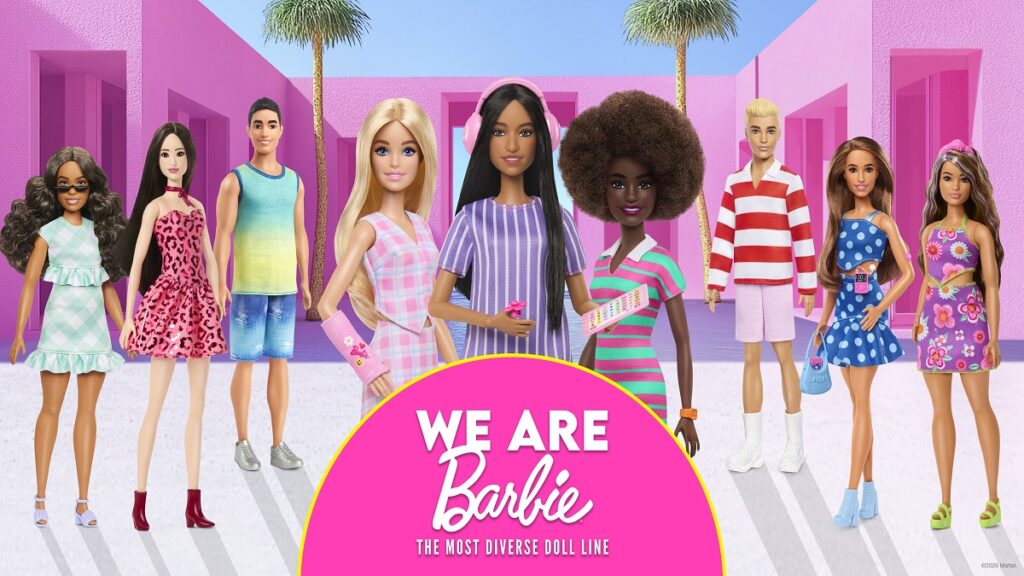
Mattel unveiled its first-ever autistic Barbie doll created with guidance from the autistic community to represent common ways autistic people may experience, process, and communicate about the world around them. This doll invites more children to see themselves represented in Barbie.
Developed for more than 18 months in partnership with ASAN, a non-profit disability rights organisation run by and for autistic people that advocates for the rights of the autistic community, this doll joins the Barbie Fashionistas collection, which features the most diverse range of skin tones, hair textures, body types, and various medical conditions and disabilities.
“Barbie has always strived to reflect the world kids see and the possibilities they imagine, and we’re proud to introduce our first autistic Barbie as part of that ongoing work,” said Mattel Dolls global head Jamie Cygielman. “The doll, designed with guidance from the Autistic Self Advocacy Network, helps to expand what inclusion looks like in the toy aisle and beyond because every child deserves to see themselves in Barbie.”
In close collaboration with ASAN, the Barbie design team made intentional design choices for the autistic Barbie doll to authentically reflect some experiences individuals on the autism spectrum may relate to. The autistic Barbie doll features and accessories include:
Body: The autistic Barbie doll features elbow and wrist articulation, enabling stimming, hand flapping, and other hand gestures that some members of the autistic community use to process sensory information or express excitement.
Eye gaze: The doll is designed with an eye gaze shifted slightly to the side, which reflects how some members of the autistic community may avoid direct eye contact.
Accessories: Each doll comes with a pink finger clip fidget spinner, noise-cancelling headphones and a tablet.
- Fidget Spinner: The doll holds a pink finger clip fidget spinner that actually spins, offering a sensory outlet that can help reduce stress and improve focus.
- Headphones: Pink noise-cancelling headphones rest on top of the doll’s head as a helpful and fashionable accessory that reduces sensory overload by blocking out background noise.
- Tablet: A pink tablet showing symbol-based Augmentative and Alternative Communication apps (AAC) on its screen serves as a tool to help with everyday communication.
Sensory-sensitive fashions: The doll wears a loose-fitting, purple pinstripe A-line dress with short sleeves and a flowy skirt that provides less fabric-to-skin contact. Purple shoes complete the outfit, with flat soles to promote stability and ease of movement.
“As proud members of the autistic community, our ASAN team was thrilled to help create the first-ever autistic Barbie doll. It is so important for young autistic people to see authentic, joyful representations of themselves, and that’s exactly what this doll is. Partnering with Barbie allowed us to share insights and guidance throughout the design process to ensure the doll fully represents and celebrates the autistic community, including the tools that help us be independent,” said ASAN executive director Colin Killick.
As part of the doll launch, Barbie is teaming up with advocates for the autistic community, including mother-daughter duo Precious and Mikko Mirage, autism advocate and creative entrepreneur Madison Marilla, and autistic fashion designer and visual artist Aarushi Pratap, to celebrate their lived experiences and lifestyles. The Barbie team filmed a unique video with them to capture and honour their personal experience with autism and delighted reactions to seeing the autistic Barbie doll for the first time. The video is available to view on the Mattel YouTube channel.
“Dolls have always brought me comfort, stability, and joy. I’ve been collecting Barbie dolls since I was four years old, and now this autistic Barbie will be one of my favourites,” said Marilla. “My good friend said these words to me, let yourself out and don’t hold yourself in, and it taught me how to educate people about autism. This autistic Barbie makes me feel truly seen and heard. I hope all the kids I’ve mentored feel the same when they see her, and I hope people who aren’t autistic feel educated and gain a better understanding of autism when they see this doll.”
Consistent with the Fashionistas dolls representing individuals with type one diabetes, Down syndrome and blindness, the autistic Barbie doll was named and created with the community’s guidance to allow more children to see themselves in Barbie. This doll, along with the entire Fashionistas collection boasts over 175+ looks, can help children better understand the world around them by encouraging doll play outside of a child’s own lived experience. It’s yet another step in making the Barbie brand a more inclusive reflection of the children who play with it.
To celebrate the launch, Barbie will donate more than 1,000 autistic Barbie dolls to leading pediatric hospitals that provide specialised services for children on the autism spectrum, including Children’s National Hospital in Washington, D.C., Children’s Hospital Los Angeles (CHLA), and Rady Children’s Hospital Orange County. This donation is intended to bring moments of joy, comfort, and representation to the community, reinforcing the power of play to foster connection and confidence.
The autistic Barbie doll is now available on Mattel Shop and from major retailers.
