
Recreating some of the most defining and sensitive chapters of Mumbai’s history for the big screen calls for more than cinematic spectacle. It requires historical accuracy, technical precision and a deep understanding of the emotional weight associated with the events being portrayed.
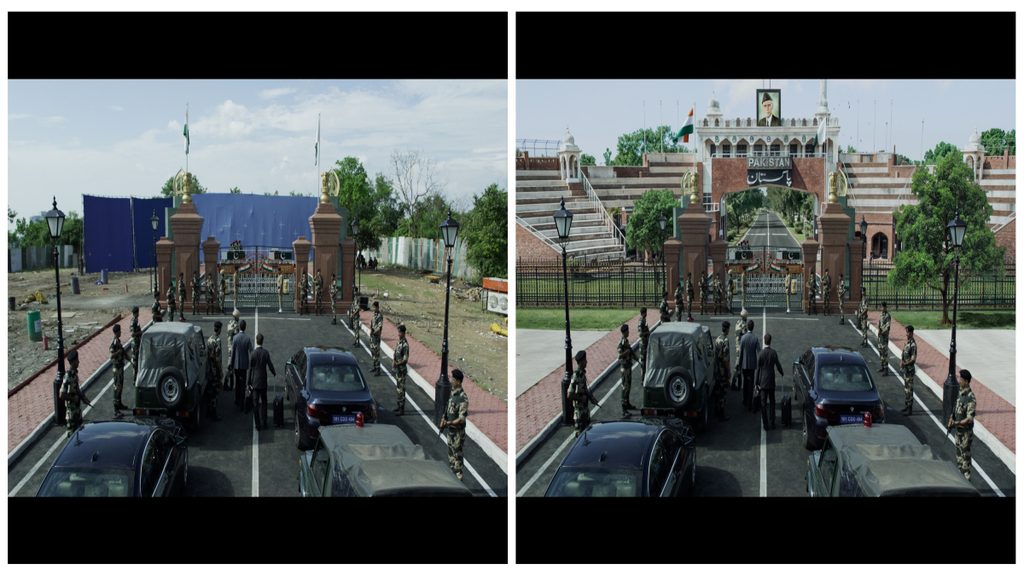
For Prahaar, the visual effects teams, SM Rolling FX and Squad VFX, had the responsibility of bringing different timelines to life, recreating historical environments and reconstructing incidents that continue to remain deeply etched in the collective memory.
With nearly 800 VFX shots across the film and a demanding three-month post-production window, the task at hand was to translate the director’s vision into believable cinematic imagery.
While SM Rolling FX, represented by Sumit Wadhokar, undertook the recreation of historical environments such as Arthur Road Jail and the old Wagah border, Squad VFX, under VFX supervisor Akhilesh Jain, worked on several technically demanding sequences involving the 26/11 attacks, including the recreation of the Taj and Chhatrapati Shivaji Maharaj Terminus (CSMT).
For Squad VFX, the brief extended beyond creating action-oriented visuals. Jain explained that the objective was to recreate the environment, scale, intensity and realism of the incidents without compromising the emotional narrative.
“The brief was not simply to create explosions or action-oriented visuals. It was about recreating the environment, scale, intensity and realism of those incidents without compromising the emotional narrative,” he said.
He added, “For me, the biggest responsibility was to ensure that the VFX never felt like an added spectacle. Every visual had to support the storytelling and make the audience feel that they were witnessing events as they actually unfolded.”
For both teams, the larger objective remained the same: ensuring that the visual effects complemented the narrative without drawing attention to themselves.
Rebuilding historical environments
For SM Rolling FX, the association with Prahaar came through its longstanding professional relationship and friendship with director Avinash. This naturally led the director to approach the studio to handle a portion of the film’s visual effects.
The Wagah border, in particular, presented a significant challenge because of the infrastructural changes it has undergone over the years. As Wadhokar explained, “Because the Wagah border has undergone massive infrastructural changes on both the Indian and Pakistani sides over the years, rebuilding its historical structure entirely in CG was an essential task.”
He described the scale and division of the work involved in the sequence: “The Wagah border sequence was one of the most VFX-heavy portions we tackled, as the environment was entirely CGI. We handled a significant portion of this, though the production also brought in another VFX studio to share the workload. While we aren’t entirely sure of the final shot distribution in the edit, that specific sequence relied completely on invisible digital environments.”
The task was further complicated by the limited availability of historical reference material for the jail structures. Recalling the challenge, Wadhokar said, “For Prahaar, a major challenge was the lack of historical reference material for the jail structures, requiring significant back-and-forth iterations to achieve an authentic look.”
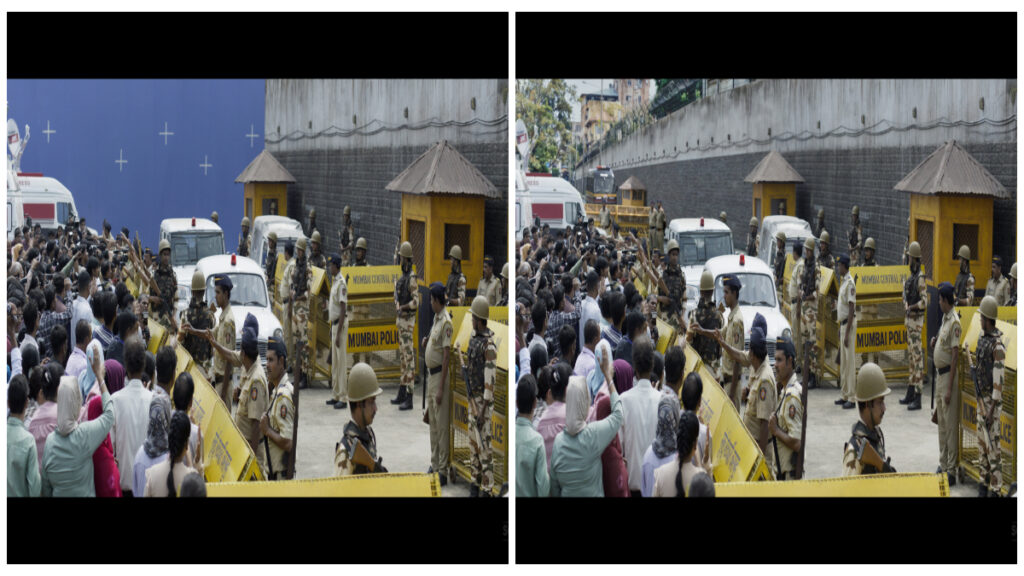
The team had to go through multiple rounds of iterations and refinements to ensure that the recreated environments accurately reflected their historical appearance.
SM Rolling FX relied primarily on Blender for its core CG pipeline. According to Wadhokar, the software’s capabilities were comprehensive enough to support the studio’s primary 3D workflow without requiring external software. The team supplemented it with a few targeted add-ons to accelerate production and optimise turnaround times.
“We rely intensively on Blender for our core CG pipeline. Its capabilities are comprehensive enough that we do not need external software for our primary 3D workflow. We supplement it exclusively with a few targeted add-ons to accelerate our pipeline and optimise our turnaround times,” he explained.
Meanwhile, Squad VFX approached the film’s period recreations through extensive reference research. According to Jain, the team studied historical photographs, archival footage and available documentation to understand how Mumbai’s locations appeared during the respective decades.
The studio used a combination of digital set extensions, clean-ups, removal of contemporary elements, background modifications and digital additions to transform present-day locations into their historical counterparts.
“The challenge was not just to make a location look older. It was to ensure that every element within the frame belonged to that particular period,” Jain explained.
From buildings and signage to vehicles, street furniture, surrounding architecture and the overall atmosphere, every detail contributed to establishing the authenticity of the period being recreated.
Recreating the intensity of 26/11
Among the film’s most technically demanding sequences were the recreations of the 26/11 attacks at the Taj and CSMT. These sequences required a careful balance between live-action footage, practical production design and digital visual effects.
For Squad VFX, the challenge extended beyond creating explosions and destruction. The team had to ensure that the visuals retained the photographic characteristics of the original footage while conveying the scale and intensity of the incidents.
The studio’s work included the explosion sequence inside CSMT and the night-time exterior shot of the Taj with the building on fire, both of which required careful integration of digital elements into the live-action environment.
Jain highlighted the importance of maintaining consistency in lighting, shadows, reflections, atmospheric conditions, camera movement, grain and colour response when integrating digital elements into live-action plates.
“Even when we are creating something as dramatic as an explosion (inside CST explosion shot and night shot of exterior Taj burning) or a large-scale destruction sequence, it is important to maintain the same photographic characteristics as the original footage. We pay close attention to lighting, shadows, reflections, atmospheric conditions, camera movement, grain and colour response,” he explained.
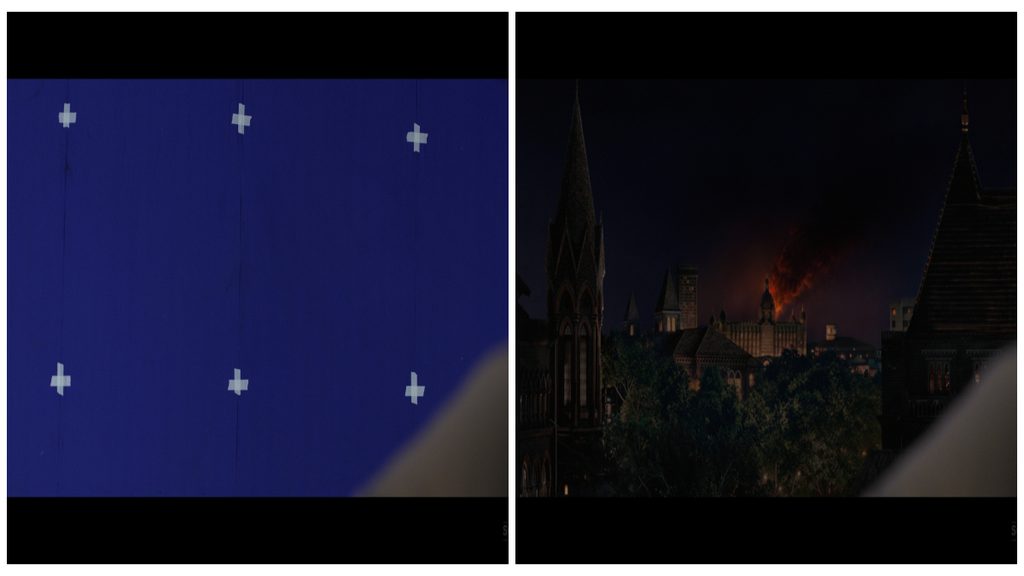
The CSMT sequence, in particular, required careful planning. Given the challenges of filming at a protected UNESCO World Heritage site, the production recreated key interior areas of the station as physical sets, covering them with 360-degree green or blue screens to enable digital extensions in post-production.
Explaining the approach, Jain said, “Recreating a landmark like Chhatrapati Shivaji Maharaj Terminus was certainly one of the technically demanding aspects of the film.”
He further explained, “It’s an impossible task to shoot a film at CST or to fully virtually create it, so the plan was to build up certain core areas of the station interiors, where most of the action happened, as a set and cover it with a 360-degree green/blue screen and do the extension in VFX.”
From a VFX perspective, the environment had to be recreated from the exact camera perspective of the live-action footage. As Jain noted, “From a VFX perspective, the environment needs to work from the exact camera perspective of the live-action footage. Scale, perspective, lighting, shadows and camera movement all have to align.”
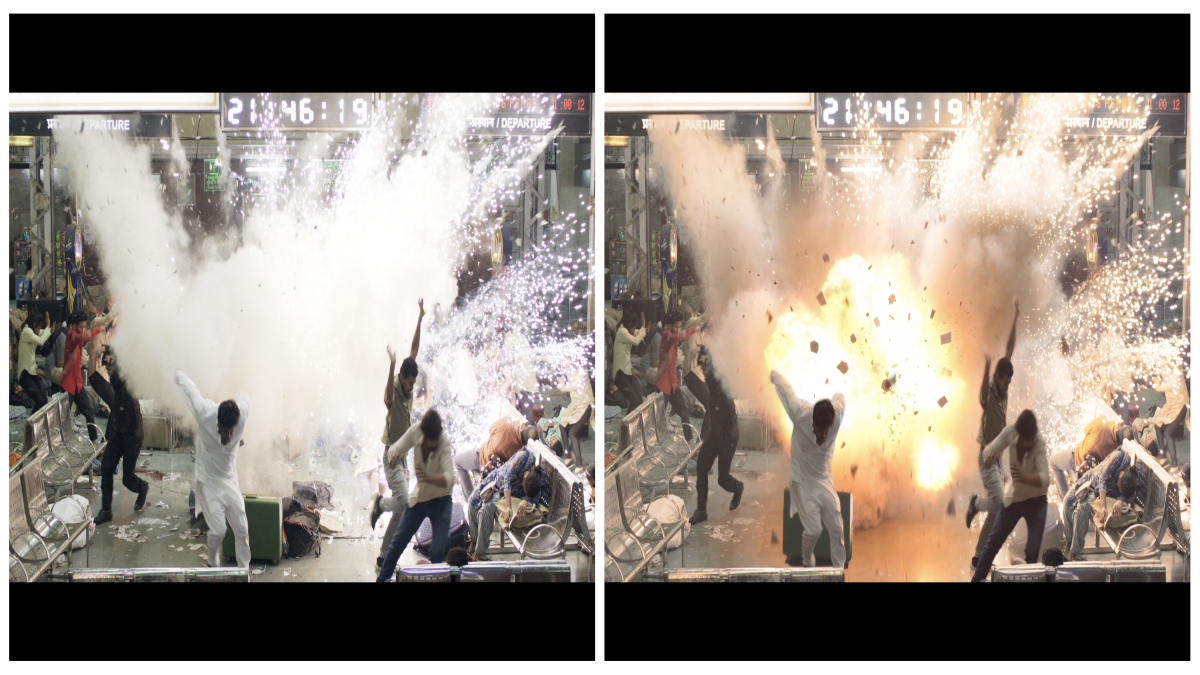
Wadhokar clarified that SM Rolling FX was not involved in the CSMT sequence. However, he acknowledged the production design team’s contribution, noting that the physical sets were remarkably close to the actual railway station. Several explosions were also captured practically on set, while the digital extensions and set top-ups were handled by another VFX studio in post-production.
The Wagah border sequence was another VFX-intensive portion of the film. “The Wagah border sequence was one of the most VFX-heavy portions we tackled, as the environment was entirely CGI,” Wadhokar said. The studio handled a significant part of the environment, while another VFX studio was also brought on board to share the workload.
The invisible art of visual effects
For both supervisors, one of the defining aspects of working on Prahaar was ensuring that the VFX remained seamlessly integrated into the film’s visual language.
Jain emphasised that even the most dramatic sequences, including explosions and large-scale destruction, had to feel as though they were captured naturally within the original environment.
“The challenge with a film like Prahaar is that the audience should never feel that they are watching a VFX shot. They should remain immersed in the narrative. The relationship between VFX, cinematography and colour grading is extremely important, particularly for action sequences. An explosion or muzzle flash cannot simply be added as a visual element in post-production. It has to feel as though it actually existed within the environment when the scene was photographed.” Jain explained.
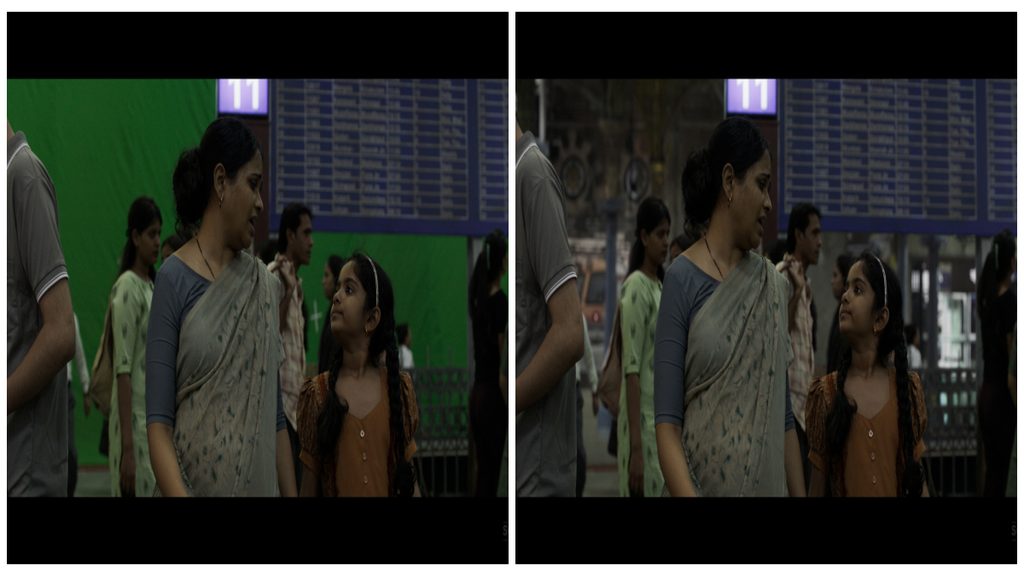
This involved understanding the lighting conditions on set, the direction and intensity of the light, surrounding reflections, exposure and how the camera responded to those elements. The team paid particular attention to interactive lighting, including illumination on actors, surrounding objects, walls and reflective surfaces.
“Equally important is the communication with the colourist. VFX shots need to be integrated into the final colour pipeline so that the contrast, highlights, black levels, saturation and overall photographic treatment remain consistent,” he added.
A similar collaborative approach was followed by SM Rolling FX. Wadhokar recalled spending considerable time with the director and creative team in the DI lab. “The collaboration was fantastic. Because we have a long-standing relationship with the director, the environment was highly supportive and creative. We spent a significant amount of time together in the lab, reviewing the plates, discussing why certain shots worked, and refining the final look to ensure everything integrated naturally into the final grade,” he said.
Beyond environment creation, SM Rolling FX also undertook specialised work involving the digital manipulation of photographs of the actor portraying Kasab. Wadhokar explained, “We had to digitally manipulate photographs of the actor playing Kasab to seamlessly match the original historical photos in action.”
Another demanding aspect of its work involved executing complex digital prosthetic makeup for one of the lead actresses.
These tasks required detailed attention to visual authenticity, ensuring that the digital alterations integrated naturally into the film’s footage.
Compositing, AI and the VFX pipeline
Squad VFX’s workflow involved a combination of established VFX tools and a structured compositing pipeline.
Jain explained, “For a project like Prahaar, compositing plays a particularly important role because a large part of the work involves integrating multiple visual elements into live-action plates while maintaining photographic realism.”
He elaborated on the studio’s workflow: “Our workflow involved detailed plate preparation, tracking, environment modifications, digital additions, CG integration and final compositing. We also believe in integrating AI-assisted workflows wherever they can improve efficiency, particularly in areas such as environment enhancement, background modifications and the creation of supporting visual elements.”
However, Jain believes that technology alone cannot determine the quality of the final output.
“Technology is only an enabler. The final quality depends on the artist’s understanding of lighting, perspective, scale, photographic references and the director’s visual language,” he noted.
AI, in his view, is an enabler that can support the creative process rather than replace it.
Working against the clock
With nearly 800 VFX shots across the film, the production presented a demanding schedule for the teams involved.
SM Rolling FX initially had approximately three months to deliver its assigned work, with on-location VFX supervision forming an important part of its involvement across the majority of the sequences it handled.
Wadhokar described the timeline as extremely tight, explaining, “We initially had just three months to deliver, and with the film containing nearly 800 VFX shots overall, there was absolutely no time to lose.”
For Squad VFX, the entire VFX execution from its end was also completed within a three-month window.
Jain explained that the process involved coordination across multiple stages, beginning with understanding the script and identifying VFX requirements, followed by plate reviews, shot planning and technical supervision during production.
Capturing the right information on set, including camera and lighting references, tracking information and other technical requirements, was essential to ensuring that the post-production teams could recreate the shots accurately.
Describing the final stages of the process, Jain said, “Post-production involved breaking down the individual shots, assigning them to the relevant departments, reviewing iterations and ensuring that the final output remained consistent with the director’s vision. The entire VFX of the film was completed in just three months from our end.”
Both studios also highlighted the importance of communication and collaboration in meeting the production’s requirements.
While SM Rolling FX did not directly collaborate with other VFX vendors on the shots assigned to it, the production appointed another studio to handle parallel sequences and help manage the overall shot volume and tight deadlines.
Jain, meanwhile, confirmed that Squad VFX did not work with any other VFX companies on its assigned work.
Recreating real incidents: The responsibility beyond technology
For Jain, working on Prahaar carried a personal significance that went beyond the technical challenges of visual effects production.
As a Mumbaikar who experienced the 26/11 attacks as they unfolded, the events remain deeply embedded in his memory. Recreating these incidents therefore came with a strong sense of responsibility.
“One of the biggest challenges was the responsibility of recreating real incidents that are still deeply embedded in the memory of Mumbai and the country,” he said.
Unlike fictional action sequences, where there is considerable creative freedom, recreating real historical events requires sensitivity and accuracy.
“The 26/11 attacks, in particular, are an extremely emotional subject for me personally. I am a Mumbaikar, and I experienced those events as they unfolded. The memories of that day are still very vivid,” Jain shared.
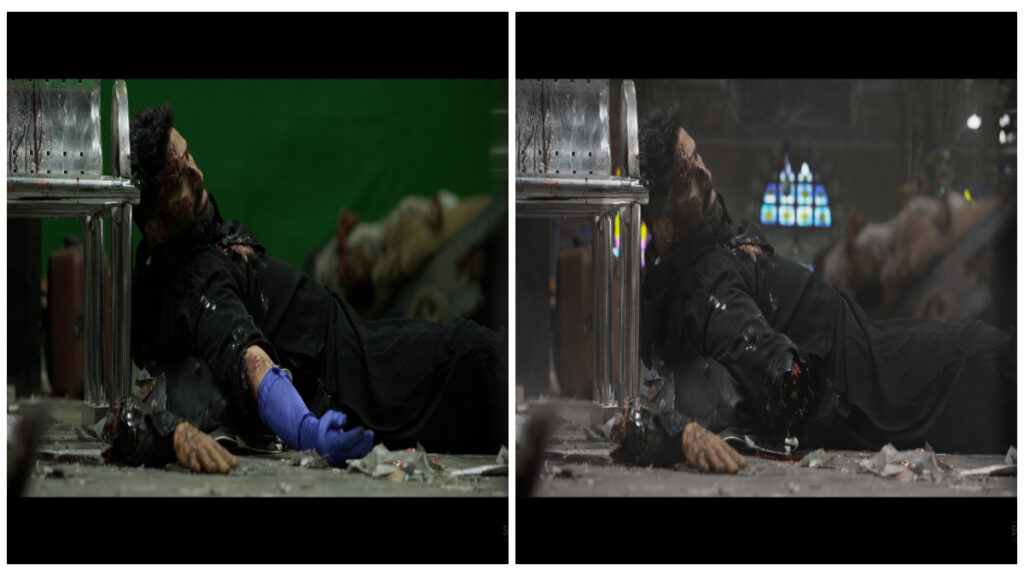
He explained that the team consciously avoided exaggerating visuals for cinematic impact, focusing instead on authenticity and historical context.
“So, while approaching these sequences, there was a conscious effort to maintain authenticity rather than exaggerate the visuals for cinematic impact,” he said. “From a technical perspective, matching historical references with modern-day footage, maintaining continuity across different shots and achieving realistic integration were important challenges. We addressed these through detailed reference studies, shot planning, continuous communication with the creative team and multiple rounds of visual reviews,” Jain explained.
Reflecting on the experience, he added, “For me, the biggest learning was that when you are recreating something that actually happened, technical excellence must go hand-in-hand with sensitivity and responsibility.”
Looking ahead: The future of VFX and storytelling
Squad VFX has recently worked on projects including Cocktail 2 and Dhurandhar 2, alongside several other projects across feature films and digital content. Its upcoming slate includes Anil Sharma’s action film, as well as projects associated with Maddock, Amazon and Netflix.
Looking at the industry’s future, Jain believes AI will significantly transform VFX production.
“I strongly believe that AI is going to transform the VFX industry, not by replacing the creative process, but by giving artists and supervisors more powerful tools to achieve complex visuals with greater efficiency,” he said.
His own ambitions extend beyond post-production execution. He wants to continue evolving as a visual effects director, collaborating with filmmakers at an early creative stage rather than limiting his involvement to post-production execution.
He is also passionate about developing original stories and cinematic intellectual properties (IPs). As he explained, “My long-term vision is to contribute to Indian cinema not just through visual effects, but also through storytelling and creating ambitious visual worlds.”
With Prahaar, the VFX teams brought together historical research, CG environment creation, digital set extensions, compositing, digital prosthetics and practical production design to recreate events and locations spanning different periods.
More importantly, their work demonstrates how visual effects can serve as a storytelling tool, helping filmmakers revisit history while retaining the authenticity and emotional context that such stories demand.
