
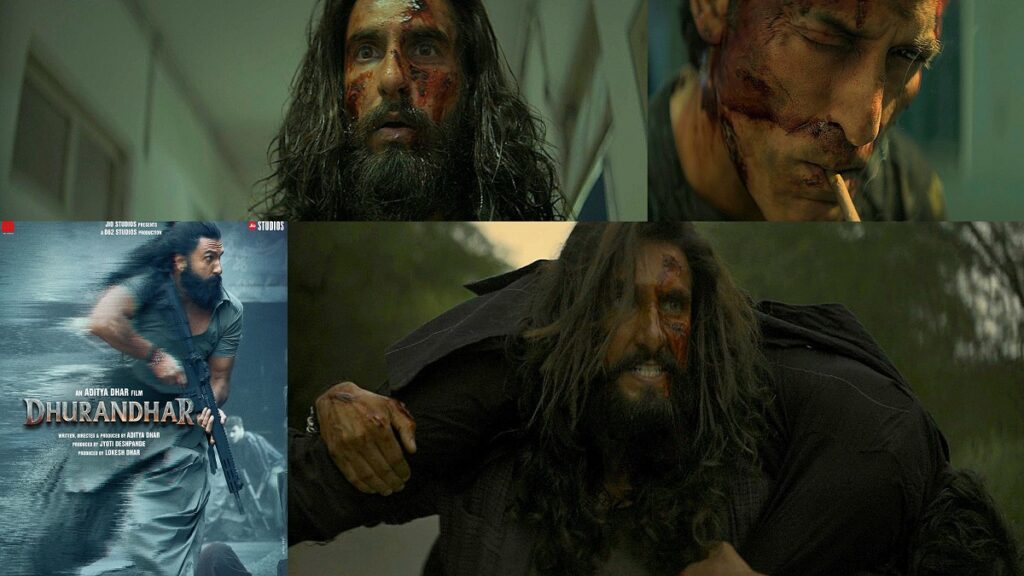
As audiences await the second instalment of last year’s highest-grossing Hindi-language films, Dhurandhar Part One, it is worth revisiting some of the striking on-screen visual moments that helped shape the film’s cinematic world. From explosive blast sequences to gritty, visceral moments, the film’s visuals were crafted with such precision that audiences often remain unaware of where visual effects begin and reality ends. The seamless integration ensured that these scenes felt raw, immersive and grounded, reinforcing the film’s commitment to realism rather than spectacle.
Indian visual effects and animation studio philmCGI played a significant role in bringing these visuals to life. They delivered close to 1,000 VFX shots for the project and recently won the Best VFX Award at the Zee Cine Awards 2026 for its work on the film. The project demanded a delicate balance between high-intensity action and grounded realism, while closely aligning with director Aditya Dhar’s narrative vision and the cinematographic style of Vikash Nowlakha.
In conversation with AnimationXpress, philmCGI studio head Sanjay Rajan and VFX supervisor Om Kangone, shared insights into the studio’s creative approach, the challenges of maintaining realism across complex sequences, and how the team managed a massive volume of VFX shots within a tight production schedule.

A collaborative vision rooted in realism
For the team at philmCGI, working on Dhurandhar was as much about understanding the director’s creative intent as it was about executing visual effects. From the outset, the production demanded that the VFX remain invisible, enhancing the story without drawing attention to themselves.
“Working on Dhurandhar was a really rewarding experience for us at philmCGI,” said Rajan. “Dhar came in with a very clear vision, he wanted the visuals to feel grounded and believable, not VFX for the sake of spectacle. That clarity helped us align the work right from the beginning and focus on making the effects invisible and integrated into the storytelling.”
The collaboration extended closely to the film’s cinematography as well. The visual style created by Nowlakha established a distinct mood that the VFX team had to carefully match and preserve.
Rajan explained, “Nowlakha’s lighting approach and framing created a very distinct mood for the film, and for us it meant the VFX had to respect that language. A lot of our effort went into making sure the effects blended naturally with his cinematography matching the lighting, the texture and the tone so that everything felt like it was captured in-camera rather than added later.”
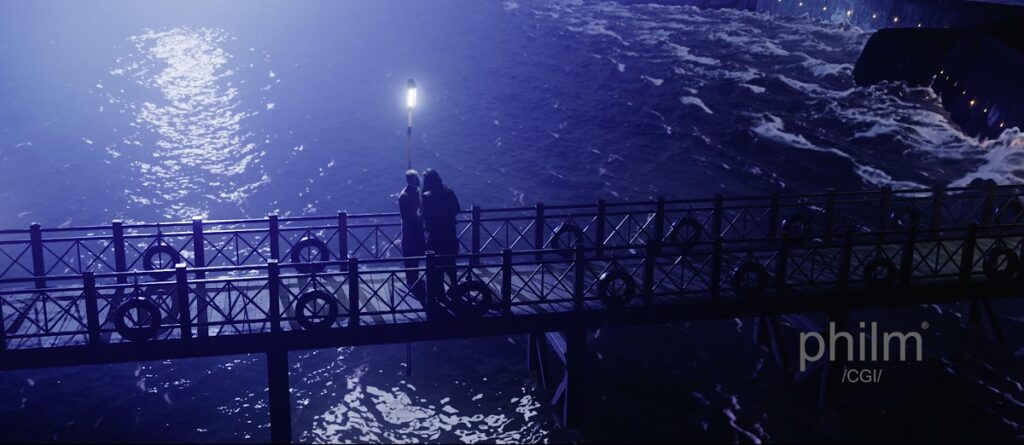
Achieving realism in high-impact sequences
While Dhurandhar features intense action sequences and large-scale moments, the approach to visual effects was deliberately restrained. The team focused on enhancing what was already captured on set rather than creating overtly dramatic digital elements, in order to serve the storyline, not overshadow it.
This meant paying close attention to the physical details that define realism from lighting behaviour and textures to scale and movement within the frame.
“For us, the focus became about enhancing what was already there, rather than overpowering it,” Kangone added. “Whether it was extending environments, supporting the scale of certain action moments, or refining elements within the frame, the goal was always to make the scenes feel more immersive while keeping them grounded in reality.”
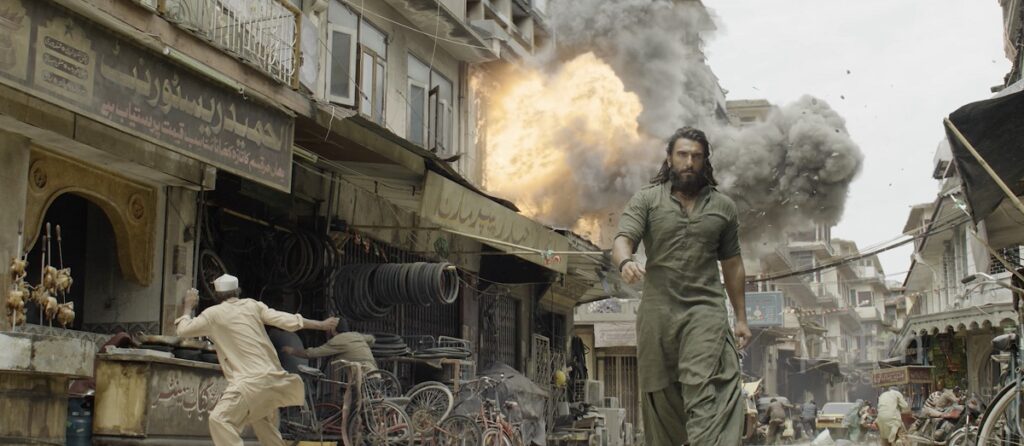
Some of the most striking moments in the film involve action-heavy sequences that required careful visual enhancement to maintain authenticity. Scenes involving explosions, debris, smoke, and environmental effects demanded detailed study and simulation work.
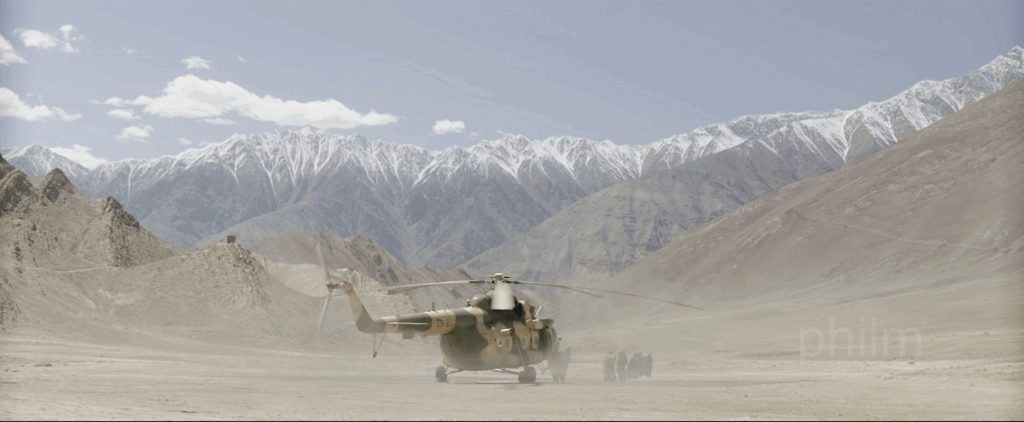
“To achieve that level of realism, we relied on a combination of practical references, simulations, and very detailed compositing work,” Kangone explained. “A lot of time went into studying real-world behaviour- how debris moves, how smoke disperses, and how light interacts with dust and atmosphere so that the effects felt physically correct rather than synthetic.”
In many cases, the VFX enhancements were intentionally subtle. Elements such as debris layers, atmospheric haze, and environment extensions were carefully introduced to enrich the visuals without drawing attention to the digital work. “These small details helped add scale, texture, and realism to the shots,” Kangone noted.
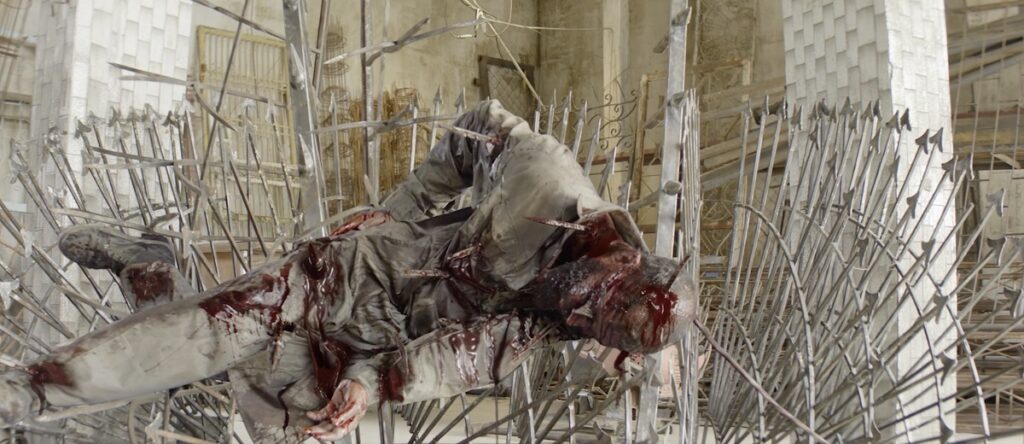
One of the sequences that demanded particular attention involved the intense scenes surrounding Arjun Rampal’s character, where the visual treatment had to maintain both dramatic impact and realism.
Handling scale: 1,000 VFX shots under tight timelines
Beyond the creative challenges, the scale of the project required careful coordination across multiple departments. With large number of shots to deliver within a tight schedule, the team had to maintain both speed and consistency.
“In total, we worked on around 1,000 VFX shots for the film, and the entire body of work was completed within a fairly intense timeline,” Rajan said. “It was a fast-paced schedule, so a lot of the credit goes to the incredible team at philmCGI that came together across multiple departments to make it happen.”
Artists from several departments, including roto, prep, matchmove, layout, FX, lighting, CG, and compositing worked in close coordination to ensure a smooth production pipeline.
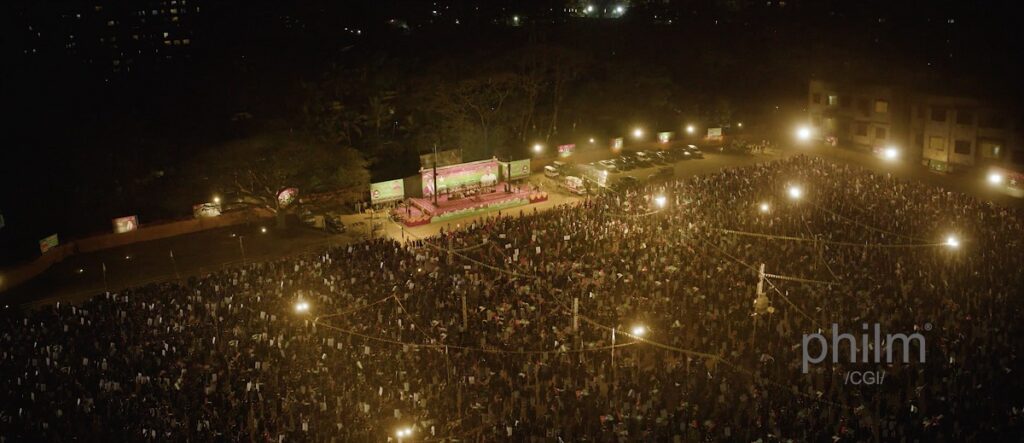
Building believable worlds and matching the film’s shadow-heavy visual language
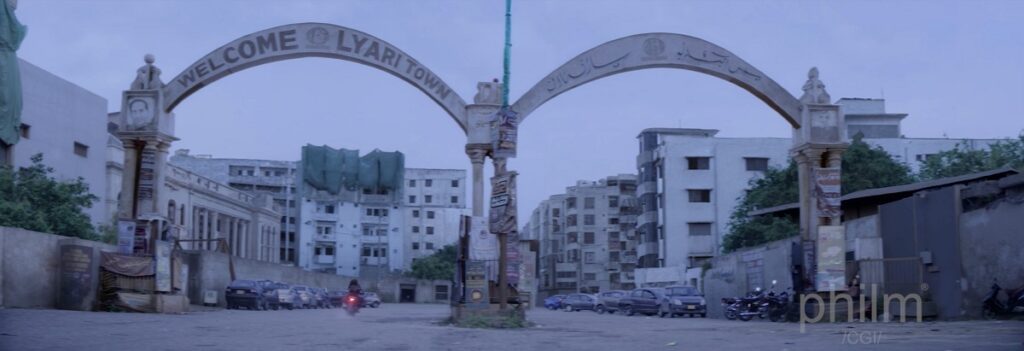
Among the numerous sequences handled by the studio, one stood out as particularly complex: the creation of the Pakistan Layari environment, a key setting in the film’s narrative.
“One of the most challenging sequences was building the Pakistan Layari set,” Kangone shared. “Director wanted the environment to feel as real and authentic as possible.” To achieve this, the team relied heavily on real-world references and detailed compositing work to ensure the environment blended seamlessly with the live-action footage.
“Achieving this required careful environmental work and close attention to real-world references so that the location felt believable,” he added.
The film’s visual palette leans heavily on darker tones and shadow-driven cinematography, which presented unique challenges for the VFX team. Ensuring that digital elements matched the lighting and mood of the footage was essential.
“Since the film has many dark and shadow-heavy frames, it was important for us to carefully match the lighting and mood of the cinematography,” Rajan said. “We closely followed Nowlakha’s lighting references and grading style to ensure the VFX elements blended naturally with the footage while maintaining the intended cinematic tone.”
Streamlining workflows and embracing AI
Handling a large volume of shots within tight deadlines also pushed the studio to refine its internal production workflows. Improving the efficiency of the pipeline became an important part of delivering consistent results across the project.
“During the project we focused on improving our internal workflows to handle a large number of shots efficiently,” Kangone explained. “We optimised our compositing and shot management pipeline, which helped the team collaborate smoothly and maintain consistent quality across the project.”
Alongside these improvements, philmCGI also continued to experiment with AI-assisted workflows as part of its evolving pipeline.
“At philmCGI we have been actively investing in R&D around AI-assisted workflows for over a year,” Rajan said. “With Dhurandhar, we were able to deploy some of these hybrid AI workflows across several stages of the VFX process to improve efficiency while keeping the creative decision-making firmly in the hands of our artists.”
For the studio, AI is viewed primarily as a tool that supports artists rather than replacing them.
“It helps automate certain technical and time-consuming tasks, allowing the team to focus more on creative problem solving and visual storytelling,” Rajan added.
Scaling up in ‘Dhurandhar Part Two’
“With Part Two, the story naturally moves into a much larger space both in terms of scale and intensity,” Rajan said. “From a VFX perspective, it opens up opportunities to build on what was established in the first film and push the world of the story further while still maintaining the grounded realism.”
For philmCGI, being part of the franchise represents an important milestone that highlights the studio’s growing capabilities. “Projects like this reinforce our ability to take on large-scale productions, manage high shot volumes, and deliver within demanding timelines while maintaining quality and consistency,” Rajan concluded.
For philmCGI, Dhurandhar represents more than just another VFX-heavy production, it reflects a philosophy where technology quietly serves storytelling rather than dominating it. By focusing on subtle enhancements, careful compositing, and close collaboration with filmmakers, the studio helped create a visual experience that feels authentic and immersive.
As Indian cinema continues to push the scale of action storytelling, projects like Dhurandhar demonstrate how carefully crafted visual effects can elevate realism without overshadowing the narrative. With Dhurandhar Part Two already knocking at the doors, the film also signals the growing confidence filmmakers have in Indian VFX studios to deliver large-scale, story-driven visuals with global-quality finesse.

