
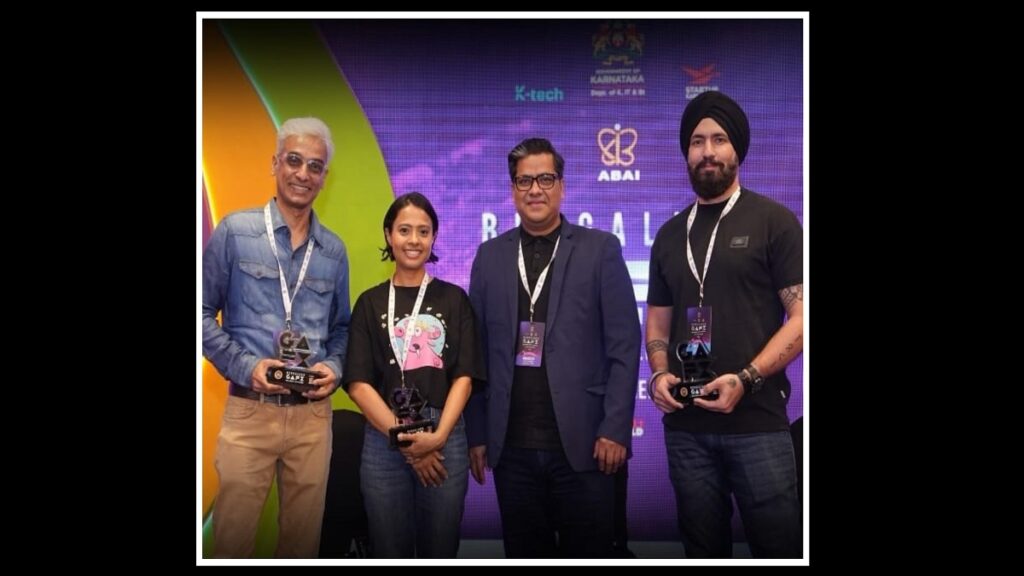
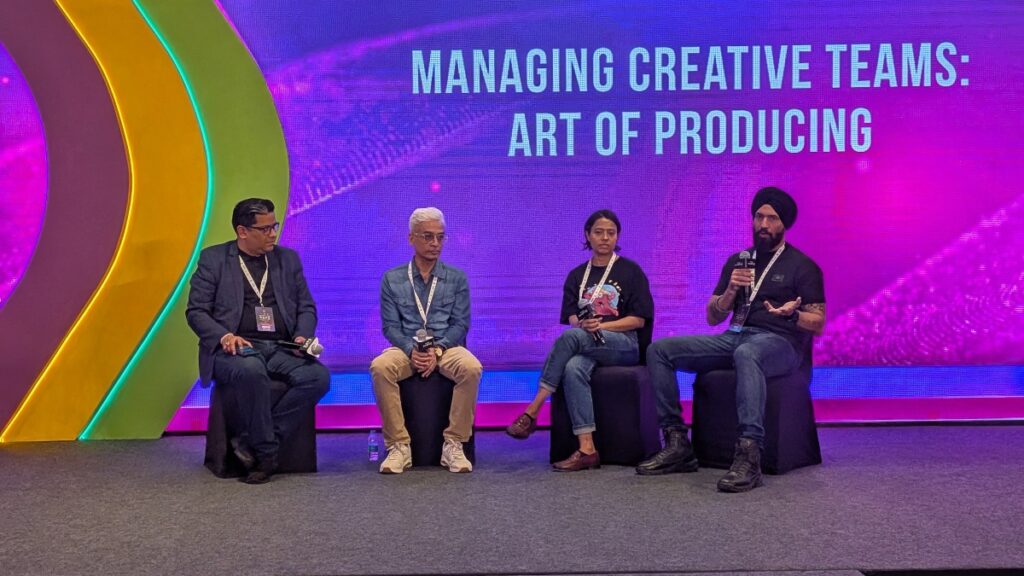
Managing creative talent while delivering projects on time within the budget remains one of the biggest challenges in the animation and VFX industry. In a panel discussion titled ‘Managing Creative Teams: Art of Producing,’ held at the recently concluded event Bengaluru GAFX 2026, industry professionals from studios including Industrial Light & Magic (ILM), 88 Pictures and Zebu Animation Studios discussed the evolving role of producers in navigating creativity, technology and production realities.
The session began with a pertinent question: Are producers creative, or are they simply administrators managing schedules and budgets?
Veteran producer who is now 88 Pictures production & operations VP Viren Chauhan argued that creativity is not limited to artists alone. “Everyone is creative by nature,” he said, recalling an early experience working on a 3D model of Amitabh Bachchan. Despite following all reference materials, something about the model felt inaccurate. “We asked random people in the studio what they thought. Everyone said it looked like Amitabh Bachchan, but not quite him.” Chauhan said. “That’s when I realised the audience always brings its own creative perspective.”
For producers, creativity often manifests as the ability to recognise issues early and guide teams towards the right output with minimal iterations.
Balancing creativity and structure
A recurring theme in the discussion was the tension between structure and creative freedom. While artists often thrive on experimentation, large-scale productions require strong processes to keep work on track.
According to the speakers, structure is essential for sustaining creativity within teams. “Creativity doesn’t thrive in chaos. When you have processes and structure in place, things automatically fall into balance,” said Zebu Animation Studios production head Ishani Priyamvada.
However, another perspective suggested that some level of disruption can drive innovation. “If you want growth, you need a little chaos,” said ILM executive VFX producer Jasjit Singh. “But the real skill lies in managing that chaos.”
He mentioned that companies grow because of creativity and high-quality projects. But companies survive because production ensures delivery within the given time and budget.
Producers, therefore, operate at the intersection of multiple departments, from artists and supervisors to finance teams, pipeline engineers and clients, ensuring that everyone works towards the same goal.
Producer’s core responsibilities
According to the panelists, effective production leadership revolves around managing three core elements: people, deliverables and timelines.
“The biggest tool a producer has is the ability to align people, the work that needs to be delivered and the deadline,” explained Chauhan. He feels if those three things work together, the project succeeds and the producers have to get these things done within the planned budget.
Listening also emerged as a critical skill. Artists often develop strong emotional attachments to their work, making communication and empathy essential in production management.
“You have to make artists feel heard,” said Priyamvada. “Once that rapport is built, managing the work becomes much easier.”
At the same time, producers must constantly balance artistic ambition with practical constraints. “We as producers have to align them towards a similar goal. But they will all have different ways of working,” observed Singh. “We have to ensure that the project is delivered within a given time with the amount of available resources.”
The role of studio culture
The panel being moderated by Astra Studios founder and CBO R K Chand also highlighted how studio culture significantly influences production workflows.
Chauhan reflected on the stark contrast between different studios he has worked with over the years, including Crest Animation Studios and DreamWorks Animation. At one studio, teams frequently worked through the night during intense production phases. “We literally brought sleeping bags to the studio,” he recalled. “It was chaos, but something magical often emerged from that chaos.” In contrast, the work culture at DreamWorks was far more structured. “The first day I walked in with a sleeping bag, the studio head told me to throw it out. That’s not how we work here,” he shared.
Such experiences underscore how culture is typically shaped by leadership rather than individual contributors. He pointed out that one has to adapt to the culture of the organisation they are working in.
Panelists also noted that studio culture is often influenced by business models, whether companies focus on high-volume service work or long-term intellectual property creation. Referencing Avatar, Singh pointed out how the film’s ecosystem helped strengthen the AVGC sector in New Zealand.
“When companies build IP, they create long-term opportunities for the entire industry,” Singh said.
AI as a production tool
The conversation inevitably turned to artificial intelligence and its growing influence on production pipelines. Panelists agreed that AI is already proving useful in automating repetitive tasks and accelerating planning processes.
“AI is a great automator,” Priyamvada pointed out. “Earlier, creating a feature film schedule could take an entire day. Now with the right prompts, you can generate a draft schedule within a few hours.”
However, they emphasised that AI remains a support tool rather than a replacement for human decision-making.
“The biggest threat to production is not technology, it’s indecision,” Singh noted. “AI can give you answers, but humans still have to make the final call.”
Concerns around data security and confidentiality were also raised, particularly when working with global studios that restrict sharing sensitive project information with external tools.
Human relationships still matter
Despite rapid technological advancements, panelists stressed that production will continue to rely heavily on human relationships. Production coordinators and assistants, for instance, remain the “eyes and ears” of the studio floor, maintaining close communication with artists and supervisors.
“AI is definitely helpful as an aiding tool. No AI system can replace the human interaction required on the production floor,” Chand remarked.
As the discussion at Bengaluru Gafx concluded, panelists agreed that managing creative teams requires a delicate balance of creativity, structure and leadership, an art that continues to evolve alongside technology and the growing scale of global content production.
