

A surefire way to slow your production down is to stop and start. When you write you get into another space. Call it creative space or imagination or the “zone” or Aunt Beauregard. It’s not the same space that holds your chair and your body. You have to get into it, which you do when you start to create. Once you’re in it, you begin to create the people and events of your story in that space. The more you get into it the more real the characters and things become, and the better you can see and hear them. If you stop after a few pages and take a break, you’re leaving this space and must then take time to get back into it. When you’re in it, and the writing is flowing, don’t stop!
I can’t tell you how many times I’d stop after writing a long scene and say, “That’s enough. I can stop for the day.” Then I’d immediately tell myself to start the next scene quickly, before I agreed with myself and stopped. Once into the next scene I’d easily ride it out. Several pages later that scene would end and I’d hear that voice again. “Hey, ten pages. Not bad! That’s twice what Dad used to do. You can stop now.” I’d persist through this and the process continued.
When you finish a scene there is a tendency to get into the “end-ness” of it and want to end your writing. Starting, as with a blank page at the beginning of a script, is harder than continuing, and a heck of a lot harder than ending. Each time you finish a scene give yourself a little nudge into the next scene. The more you write, the better writer you’ll become, and there is a correlation between one’s production and one’s morale. The more you produce, the better you’ll feel.
Here’s a tip that cannot be repeated enough. Keep it simple! I’m still learning this one. The biggest mistake writers make is making everything too complicated. Take a look at the best books and movies and you’ll discover an amazing fact: you can usually describe the story in a sentence. What makes the writing good is time spent on character, conflict, and comedy. An excessively complex story leaves no time for these. I suggest you chant this each day before you start writing: keep it simple keep it simple keep it simple…
One of the most emotionally dangerous traps lying in wait for the writer is having just one project to sell. If it is rejected, your entire creative repertoire has been rejected. Life can feel pretty dismal when the one thing you’ve sunk your heart and soul into is unwanted. This is why actors who go on only a few interviews are emotionally crushed when they aren’t hired. If you have three or four projects, say a spec script, a series idea, a novel, and a children’s book, then when you get a pass on one you’ve only been told 25 per cent of your life is worthless, and you’ve still got a majority of your creative energy that hasn’t been negated.
©Jeffrey Scott, All Rights Reserved
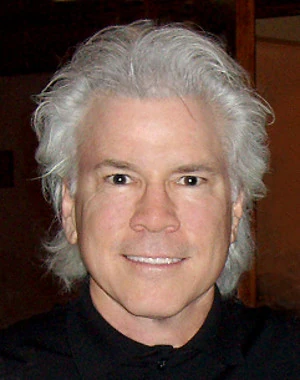
(Jeffrey Scott has written over 700 animated and live-action TV and film scripts for Sony, Warner Bros., Disney, Marvel, Universal, Paramount, Columbia, Big Animation, Hanna-Barbera and others. His writing has been honoured with three Emmys and the Humanitas Prize. He is author of the acclaimed book, How to Write for Animation. To work with Jeffrey visit his website at www.JeffreyScott.tv.)
Click here to read other articles from this series
