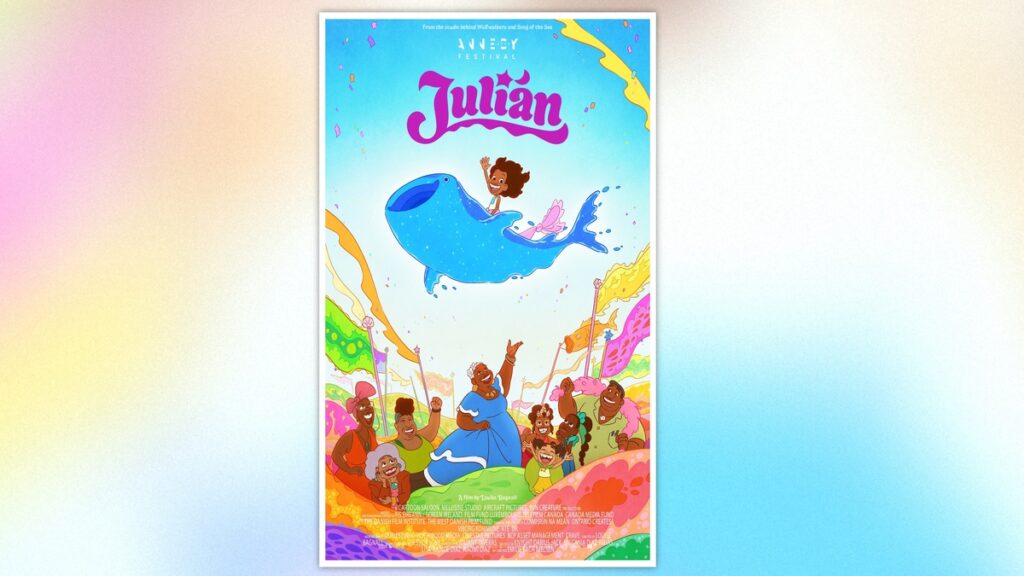
Few children’s books have captured the beauty of self-expression and acceptance as tenderly as Jessica Love’s Julián Is a Mermaid. Now adapted into an animated feature by Cartoon Saloon, Julián expands the beloved story into a visually rich and emotionally resonant coming-of-age tale. Set against the vibrant backdrop of Brooklyn’s Caribbean communities and the dazzling Mermaid Parade, the film follows a young boy’s journey toward self-discovery, belonging, and creative freedom.
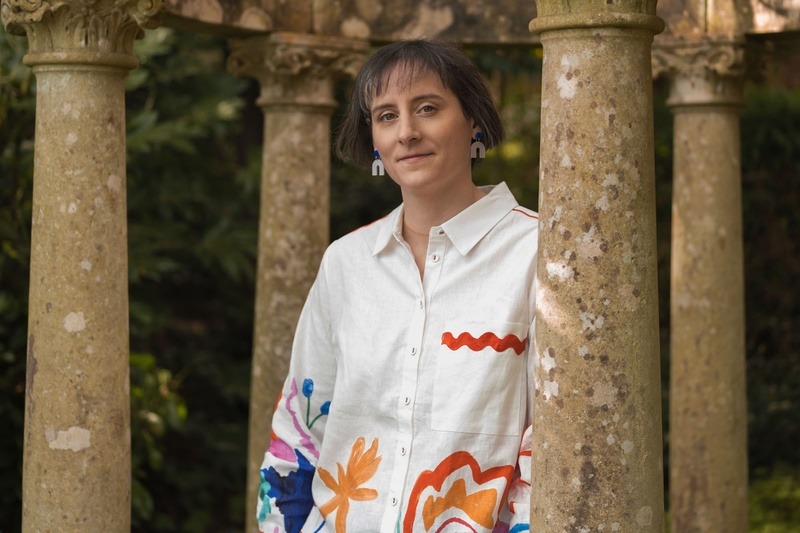
Animation Xpress got a chance to interview director Louise Bagnall ahead of the film’s premiere at Annecy International Animation Film Festival. She spoke about adapting the acclaimed picture book, exploring the evolving relationship between Julián and his grandmother, celebrating cultural authenticity, and harnessing the expressive power of hand-crafted 2D animation to create a world where imagination and reality flow seamlessly together.
Julian is adapted from Jessica Love’s beloved book Julián Is a Mermaid. What drew you to the story of this wide-eyed young boy, and what inspired you to bring his journey to the screen as a feature-length animated film?
The book is very inspiring. It’s full of beautiful illustrations and captivating characters, with a wonderfully empowering message. One moment that particularly stuck with me was a pivotal scene where Abuela sees Julián in costume for the first time. The moment is tense and engaging, it doesn’t dictate, but instead asks the audience to lean in. It showed me that there was a lot of potential to explore and expand upon in a feature film.
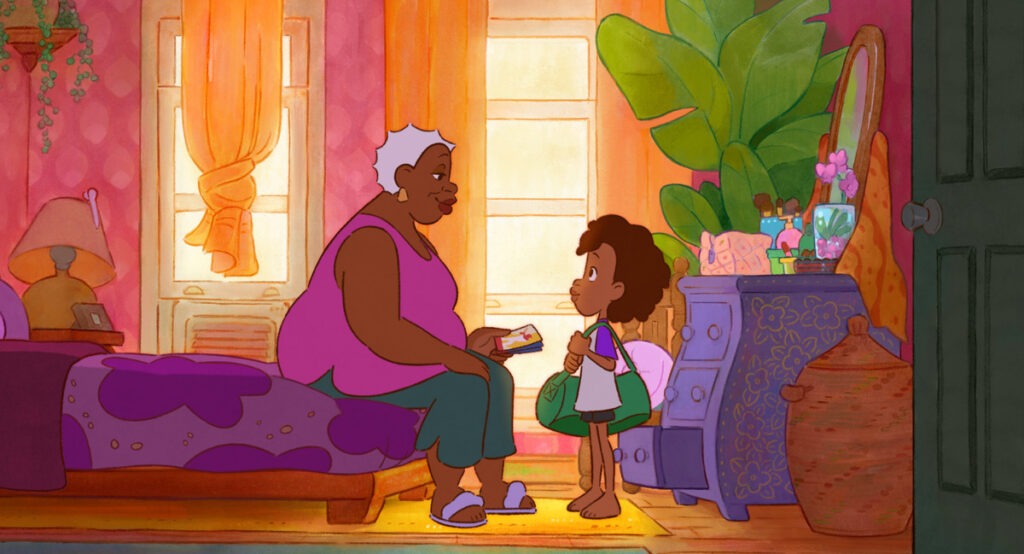
The story begins with a sense of unfamiliarity between Julián and his grandmother, shaped by distance and a generational gap. How did you approach developing their relationship, and what makes their bond such an emotional cornerstone of the film?
The relationship between Julián and his grandmother is central to the film and required a lot of careful consideration. It’s not a one-sided relationship; both of them learn and grow as they get to know one another. As Julián discovers more about his heritage, he opens up a side of his grandmother he never knew before. She, in turn, is given a chance to pause and reflect on her own journey and come to terms with what she lost along the way. The film explores how understanding where we come from can help us understand who we are.
The excitement surrounding the Mermaid Parade introduces Julián to a vibrant community where he finds friendship, acceptance, and a deeper understanding of himself. What are the key themes that Julian explores through this journey of self-discovery?
The Mermaid Parade promises Julián the opportunity not just for creative freedom, but also a place where he can be seen and celebrated. In order to get there, Julián must understand himself more fully. He must navigate his new relationship with his grandmother and learn how to overcome unexpected setbacks. It’s a journey that focuses on finding your voice, discovering your roots, and creating meaningful connections.
The film touches on issues such as bullying, identity, and gender stereotypes while remaining hopeful and uplifting. What message do you hope young audiences take away from Julián’s story?
First and foremost, I hope that young audiences enjoy the film! I want them to come away feeling empowered, inspired, and excited to follow their own ‘mermaid’ dreams, whatever form those may take!
At a time when conversations around inclusion and representation are becoming increasingly important, how do you see Julian contributing to a broader understanding of individuality and self-expression among children and families?
At its heart, Julián is a story that so many of us can relate to, young or old. It looks at those pivotal moments in childhood that shape how we come to know ourselves. As a parent, I’m more aware than ever of how formative those times can be. Being in a supportive environment gives us a better chance to grow and learn, and ultimately to know ourselves better.
The film celebrates Caribbean culture and the rich diversity of Brooklyn’s communities. How important was cultural authenticity in shaping the characters, settings, and overall narrative of the film?
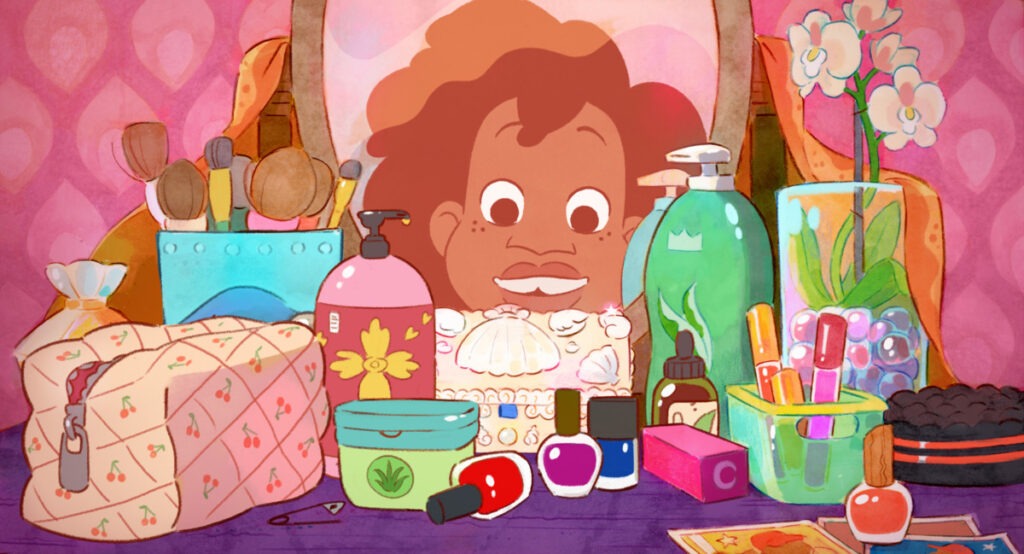
Cultural authenticity was a key component of how we adapted and expanded upon the world and characters in the film. Working closely with writer Juliany Taveras and co-director Guillaume Lorin, among others, we were able to bring in further specificity and nuance that really brings the world to life. Everything from the food Julián eats, to the music on the block, to the cookie tin-turned-sewing-supplies container, was informed by that. Developing those aspects enriched Julián’s journey, making it all the more real.
Were there any creative or technical challenges unique to depicting Julián’s magical transformation and underwater-inspired fantasy sequences in 2D animation? Would you like to elaborate?
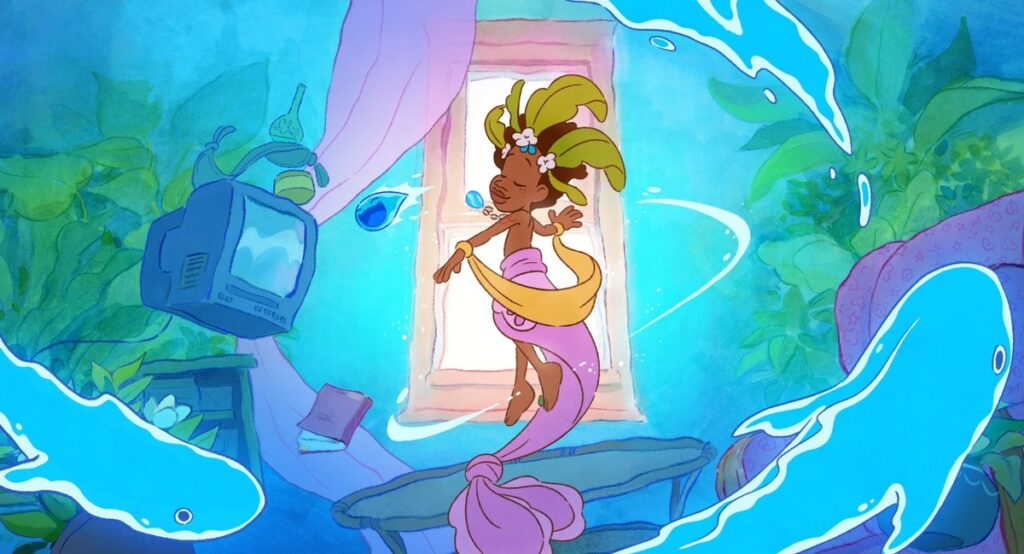
We really wanted to ‘wow’ audiences with the visuals for our underwater sequences, so we didn’t hold back! We use dynamic camera movements, colourful shoals of fish, and lush FX animation to really sell this emotional high point. In 2D animation, this requires a lot of rigorous planning, let alone the animation itself, but we knew it would be worth all the time and effort. These are some of the most complex shots in the entire film, but it really felt like the right moment to dazzle the audience. I’m thrilled with the final result!
Why was 2D animation the right medium for telling this story, and what creative opportunities did it offer compared to other animation techniques?
At Cartoon Saloon, we love the artistry and possibilities inherent in 2D animation. It has a natural warmth to it, you can really feel the artist’s hand coming through. We were able to embrace this by using traditional media, markers, and colouring pencils to create the world and backgrounds around Julián. With this approach, we can also blur the lines between realities, letting imaginative or magical moments blend seamlessly with our characters’ world. It’s such a fantastic and freeing medium.
How did you balance the film’s fantastical elements with the grounded emotions of family, identity, and growing up?
When adapting the book, we decided to bring in more fantastical elements that would give us insight into Julián’s thoughts and inner world. It really helped us tell the story from his perspective and understand his emotional journey. We also wanted Julián to exist in a familiar world that felt believable, one that had rules and boundaries, bringing challenges that magic or imagination alone could not overcome. Ultimately, the story is grounded in the very human connection between Julián and his grandmother.
As animation increasingly embraces diverse voices and experiences, what changes would you like to see in the industry over the next decade?
I love that animation continues to tell interesting and original stories. The medium has so much to offer. I hope there will be more opportunities for a wider variety of stories, and I hope it will become easier for underrepresented people to get those same opportunities.
What does it mean for the team to showcase Julian at Annecy, one of the world’s most prestigious animation festivals? How do you hope international audiences connect with Julián’s deeply personal yet universally relatable story?
Premiering the film in Annecy was a real dream come true! It’s such a fantastic place to celebrate what the team has achieved. It doesn’t get much better than watching a film you’ve created together with an audience on the big screen.
Would you like to share anything about your upcoming projects?
Right now, my focus is on bringing Julián to the world! I’ve been working on the film for a long time, so I’m very excited to finally get it out there.
At its core, Julián is a celebration of individuality, empathy, and the transformative power of being truly seen. Through the heartfelt bond between a curious young boy and his grandmother, the film navigates themes of identity, heritage, and self-acceptance with warmth, sincerity, and visual splendour. By blending magical fantasy with deeply human emotions, Bagnall and the Cartoon Saloon team have crafted a story that speaks to audiences across generations and cultures.
As Julián made its debut on the global stage at Annecy, it stands as a testament to animation’s unique ability to tell personal stories that resonate universally, inviting viewers everywhere to embrace their own ‘mermaid dreams’ and discover a little more of themselves along the way.
