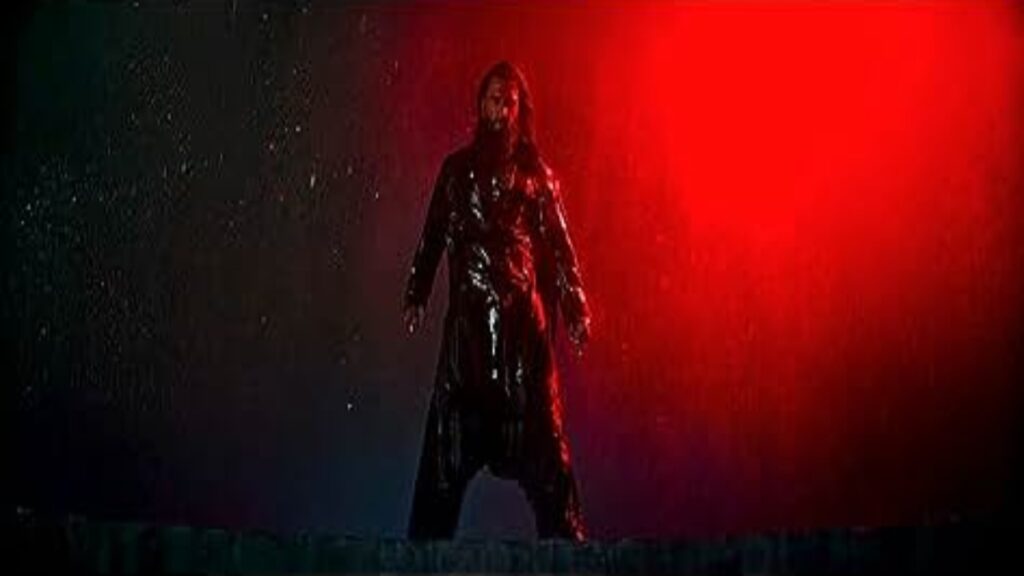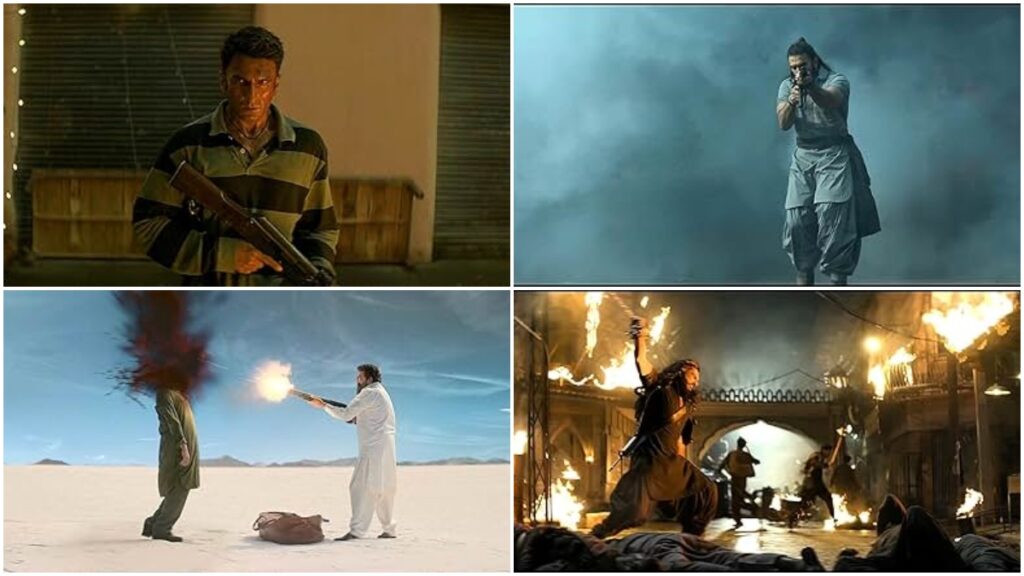
“When the VFX isn’t seen in the film, but the impact is felt, that’s the real success for me,” said Dhruti Ranjan Sahoo, the VFX supervisor of Dhurandhar and Dhurandhar: The Revenge.
Movies are woven into everyday life; most pass through, but a rare few leave a lasting imprint. You know the kind: the ones that don’t just dominate the box office, but reshape conversations around cinema itself. Dhurandhar (2025) and its sequel Dhurandhar: The Revenge (2026) are exactly that.
The audience experienced the story as it unfolded on screen. Now, we pull back the curtain on the visual effects, exploring the craft, precision, and restraint that made the spectacle feel real. For Sahoo, VFX isn’t about drawing attention; it’s about making the imagined feel completely real, so the audience never questions what they’re seeing.
In an exclusive interview with AnimationXpress, Sahoo shares how he came on board Dhurandhar mid-shoot and takes us behind the scenes, breaking down the techniques, challenges, and creative decisions that brought the film’s world to life without ever letting VFX speak louder than the story.
Here’s Sahoo breaking down the magic behind Dhurandhar:
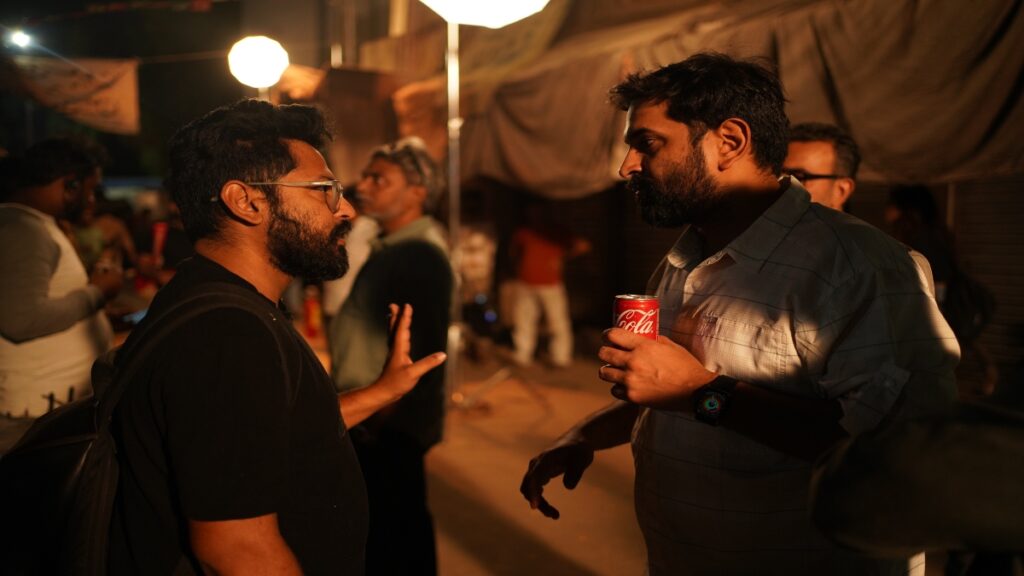
Can you tell us about your VFX journey, how it started, and what inspired you to enter the field of visual effects?
My journey began with a strong instinct for visual storytelling, but it took shape when I discovered animation and visual effects during an event in Bhubaneswar. That exposure led me to formally pursue VFX and move to Mumbai.
My early experience as an intern on a Ram Gopal Varma (Indian filmmaker) film gave me a practical understanding of how VFX integrates with filmmaking, from shot construction to on-set decision-making. Over time, that foundation evolved into my role as a VFX supervisor.
How did you become associated with Dhurandhar and Dhurandhar: The Revenge?
For the past few years, I have been working as an independent VFX supervisor with multiple studios and production houses. My association with Dhurandhar and Dhurandhar: The Revenge was quite unexpected. It was one of those sudden industry calls, and I came on board right in the middle of the shooting schedule. Joining a film at that stage was both exciting and challenging, as I had to quickly align with the director’s vision and the scale of the project.
This was a massive project. How was your initial discussion with director Aditya Dhar like?
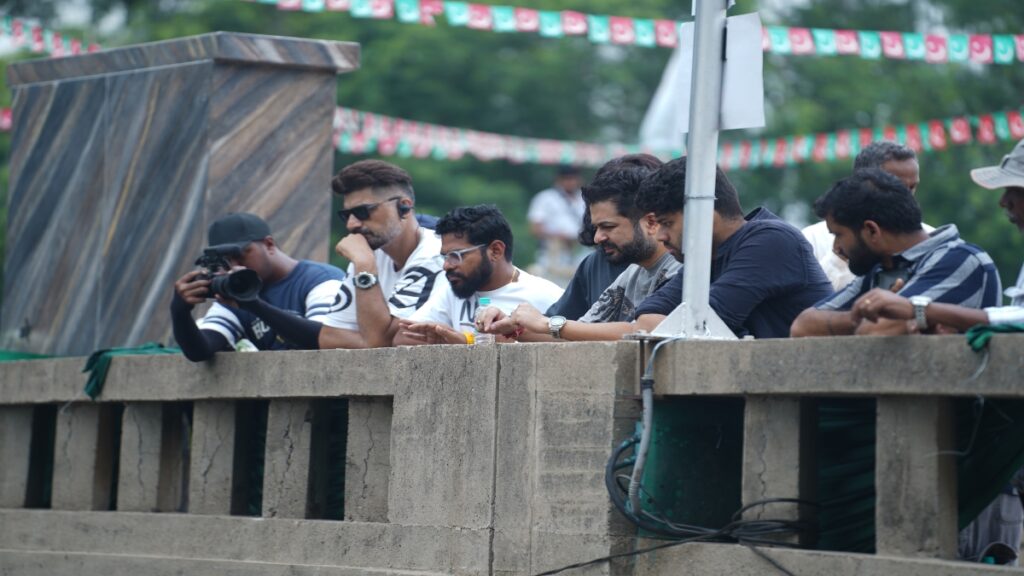
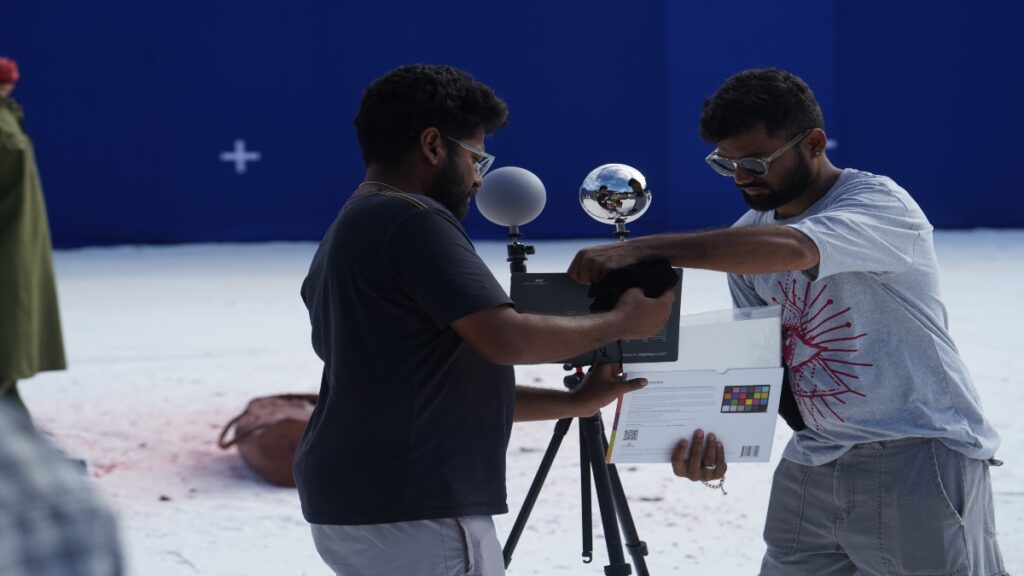
The initial discussions with Aditya Dhar were detailed and creatively driven. From the first meeting, it was clear that the film was mounted on a massive scale. He had a precise vision for every key sequence. A significant part of our conversation revolved around previsualisation, shot design, and on-set planning. We broke down camera movements, plate requirements, environment extensions, and how VFX would integrate with the action and narrative, rather than feel like an add-on. There was also a strong technical focus, planning for taking on set data, HDRI captures, reference photography, and ensuring all on-set elements were in place for a smooth post-production pipeline.
Those early discussions were critical in aligning the creative vision with execution. Aditya Dhar and his team trusted me and gave me the freedom to explore, to help shape the world of Dhurandhar.
Which was the most complex sequence to achieve in Part 1?
The climax sequence was one of the most challenging due to its scale and technical complexity. It involved a combination of live-action and VFX, with certain portions shot on green screen for safety and flexibility. We used CGI simulations for high-intensity elements and relied on body doubles along with 3D scans of the actors for face and body replacements. The final result was achieved by carefully blending practical footage with visual effects.
Can you elaborate the use of VFX in character looks, prosthetic enhancements, stunts and graphic sequences?
The character details were achieved through a combination of practical work on set and subtle digital enhancement in post. The wigs, prosthetics, and ageing makeup were primarily created by the makeup and costume teams during the shoot, which gave the performances a natural base and helped the actors interact with the look in a realistic way. Our role in VFX was to enhance and refine wherever needed, whether it was smoothing prosthetic edges, blending wig lines more seamlessly, refining skin textures, or adding subtle age detailing and continuity fixes across shots.
A similar approach was adopted for stunts. In high-intensity combat scenes, the priority is always to ground the action in real stunt performance and then use VFX as an invisible support layer.
Graphic shots were challenging because blood is one of the hardest elements to make feel real on screen. On set, we used practical effects like squibs, prosthetics, and blood rigs to capture authentic interaction. In VFX, we enhanced this with subtle simulations and compositing to refine the look and timing.
Is there one scene you’re the most proud of?
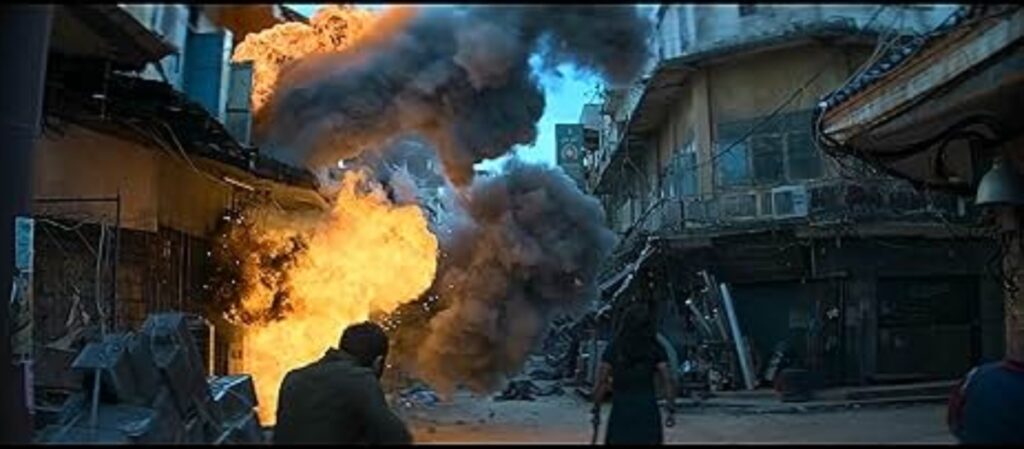
One sequence I’m proud of is the climax in Part 2. It appears as a long, continuous stretch and was technically complex. We combined live-action with multiple VFX layers, including stunts, effects, and environment extensions, all stitched together from different passes. For high-risk moments, we used face and body replacements with a hybrid of CG and AI tools.
With over 3000 VFX shots in the first film and over 3500 VFX shots in the sequel, what kind of deadlines were you working with?
The timelines were honestly intense. The release date was locked while we were still shooting, so the pressure on post-production began much earlier than usual. Less than a month before release, we were still filming a few critical scenes, and the edit was evolving, which meant there was no luxury of waiting for a complete picture lock. At that scale, every single day counted. We had to run production and post [production] almost simultaneously.
I started working closely with the post [production] team and our VFX partner studios during the shoot itself, so asset builds, CG environments, and look development were already underway while scenes were still being filmed. The moment we wrapped a sequence, I would identify the master shots and send them to the VFX studios, even before the edit was fully locked.
It was a constant high-pressure pipeline: shooting, editing, asset creation, shot turnover, and reviews all happening in parallel, but that aggressive overlap in workflow was the only way to deliver the scale the film demanded within such a tight release window.
How big was the VFX team? Can you take us through your process of collaboration?
The team was massive. Across five partner studios (Envision VFX, philmCGI, Resonance Digital, Dneg, and R2 VFX), more than 1500 artists worked on both parts, making it one of the most extensive visual effects collaborations I have supervised.
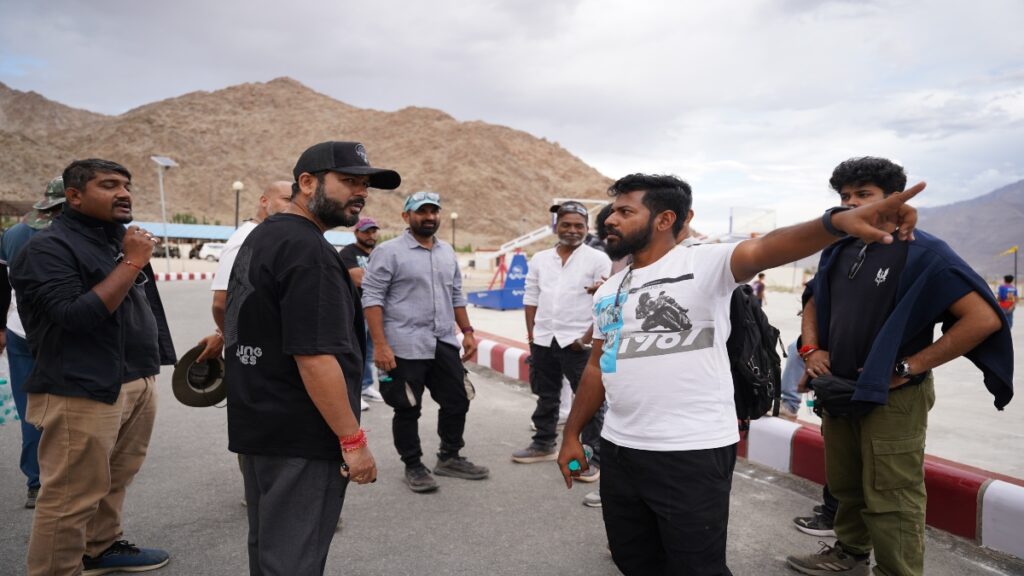
I broke the film down sequence by sequence and assigned shots based on each studio’s strengths, complexity, and delivery timelines. Since I was involved from the shoot stage, I could provide clear on-set references and technical briefs early on. My challenge was to ensure that these studios, despite being separate units, functioned as a cohesive creative pipeline.
Regular reviews, constant coordination, and day-and-night tracking ensured that all five studios worked as one creative unit and maintained the same visual language throughout the film.
After working on Part 1, was there anything you approached differently in Part 2?
Yes, definitely. After Part 1, we knew exactly where the pressure points in the pipeline were, so for Part 2, I approached the planning much more aggressively as a supervisor. We started asset builds, shot breakdowns, and sequence planning much earlier so that no time was lost once the edit started evolving. The scale was bigger, and the deadlines were even tighter.
Our artists across partner studios worked relentlessly, often around the clock, on environments, simulations, destruction, and shot detailing. Having gone through the pressure once, Part 2 was built on stronger planning, faster decision-making, and the sheer hard work and dedication of every artist involved.
How was your experience working with the director and the entire team?
It was an extremely positive experience. Aditya Dhar is grounded and approachable, which creates a very comfortable and collaborative working environment. As a director, he’s incredibly sharp and clear about his vision. At the same time, he gives his team the freedom to explore creatively, which is very important in VFX. He’s also highly particular about quality, but never in a way that creates unnecessary pressure. He trusted me and the VFX partners fully, allowing us to deliver our best work.
The entire team reflected that same energy – cooperation, focus, and passion. That collective spirit made even the most challenging phases of the project enjoyable and creatively fulfilling.
What were your key learnings from the films?
Working on both parts was a strong learning curve, especially in handling tight timelines without compromising quality. You need a clear breakdown of shots, priorities, and execution strategy before the shoot even begins.
This reinforced the importance of being actively involved on set and staying closely aligned with all departments, particularly while managing multiple VFX teams simultaneously.
More than anything, it taught me how to balance speed with realism, because ultimately, the audience connects only with what feels real on screen.
Do you think audiences today appreciate VFX?
When VFX supports the performance naturally, it enhances realism without drawing attention. Audiences today are very aware. They may not consciously notice VFX, but they definitely feel it. If something feels artificial, the audience immediately senses it. For me, when the work isn’t seen but the impact is felt, that’s the real success.
What is your next project going to be?
At the moment, I’m in discussions on a couple of projects, but it’s still a bit early to announce anything officially. I’m keen to take on work that continues to push the boundaries of invisible VFX and hybrid filmmaking.
After handling a project of this scale, my focus is on choosing stories that are not just visually ambitious but also require a strong integration of storytelling and technology. I’m particularly drawn to projects where VFX enhances realism and remains seamlessly embedded in the narrative, rather than existing purely for spectacle.
Is there anything you would like to add?
I would like to extend my heartfelt gratitude to all the VFX studios: Envision VFX, philmCGI, Resonance Digital, Dneg, and R2VFX, who were part of this incredible journey. A very special thanks to every artist, along with the leads, supervisors, IT, production, and management teams, who poured their hearts into this work and stood by it day and night. This achievement is truly a reflection of your passion, commitment, and unwavering dedication. What we have created together goes beyond just visuals; it’s the result of collective belief, hard work, and a shared dream brought to life.