
In post-production, what you see is only as good as what your monitor shows. A colour that looks right on one screen may appear different on another, while details buried in dark scenes can disappear altogether. BenQ India and South Asia is looking to tackle these challenges with monitors designed specifically for professional video post-production.
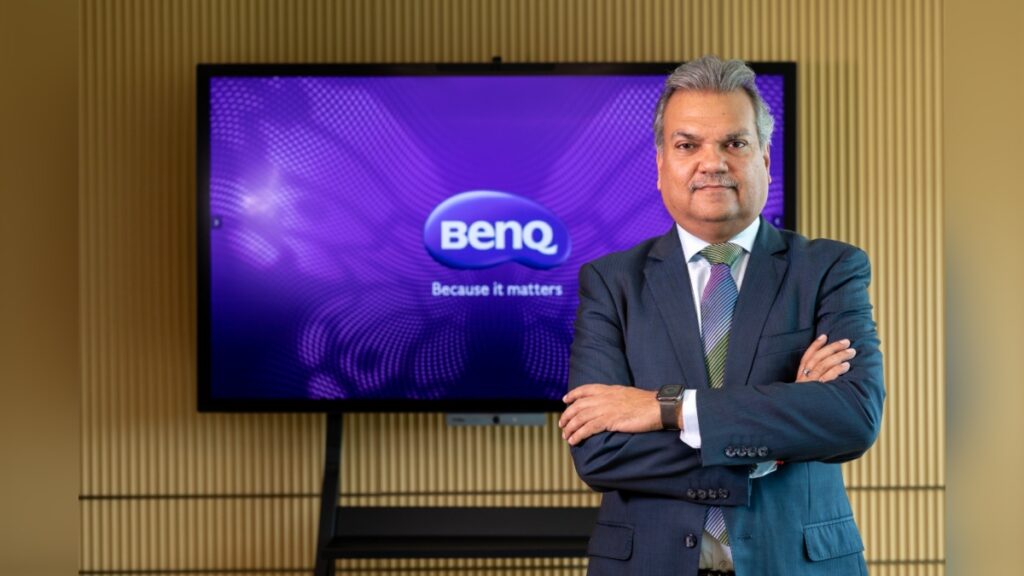
At A.B.I.S (India’s Broadcasting and Infotainment Show), BenQ India and South Asia managing director Rajeev Singh told AnimationXpress that the company’s new monitors mark a shift from hybrid displays towards tools built primarily for video workflows. Previously, its monitors catered to graphic design, photography and video post-production. The new range, however, is designed with the needs of video professionals in mind.
A key differentiator is Calman verification and certification, which Singh said is relevant to the video industry. BenQ’s PD-series monitors, by comparison, offer Pantone certification aimed more at static imagery. The distinction reflects the company’s focus on the demands of moving pictures, where colour accuracy and consistency can make or break the final cut.
The monitors also include workflow-focused features such as marker mode and area zoom. The latter allows users to magnify a specific part of the image without zooming into the entire frame, helping professionals examine details more closely.
Another major feature is screen uniformity technology. According to Singh, brightness on conventional professional monitors can vary across the display, with edges appearing darker than the centre. BenQ’s technology aims to maintain consistent brightness across the screen, helping colours and contrast appear uniform from one area to another.
The monitors are also designed to bring out subtle variations in dark scenes. Where different shades of black can merge into a single patch on other displays, BenQ’s monitors aim to reveal distinctions between blacks, greys and the finer details within shadows. For video editors and colourists, those nuances can be crucial to preserving the intended look of a scene.
Getting the picture right the first time
Singh believes professional monitors are becoming increasingly essential for studio professionals and VFX artists, rather than being an upgrade reserved for the final stages of production. When artists work on displays that do not accurately represent colour, studios risk inconsistent outputs, additional editing and time-consuming colour correction later.
“Just because he is not having a proper monitor, he will end up producing some output which will not be what you are looking at,” Singh explained, highlighting how differences between displays can lead to repeated work.
For smaller and mid-sized studios, the new monitors could offer particular value. Larger facilities may have dedicated post-production review and final colour-grading setups, but not every studio can afford separate systems for each task.
Singh added, “BenQ’s monitors could serve both as post-production and colour-grading displays, allowing mid-sized facilities to handle more of the workflow on a single screen.”
On future expansion in India, Singh remained tight-lipped about upcoming launches, saying the company could not yet reveal what was next. He maintained, however, that the current monitors offered advanced features and technology at what he considered reasonable prices.
For BenQ, the pitch is simple: better visibility at the start can mean fewer fixes at the finish. In a business where every shade matters, getting the picture right is not just a matter of taste, it is part of the production process.
