
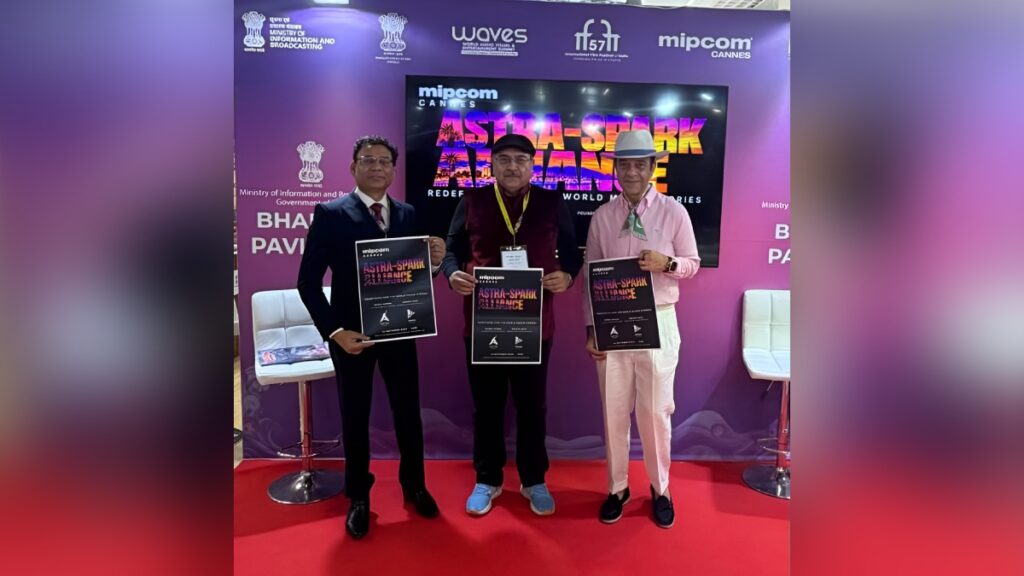
AI can generate striking images, but keeping characters, costumes and locations consistent across an entire film is another story. Astra Studios and VerSe Innovation aim to bridge that gap with the launch of the Astra-Spark Alliance at Mipcom, combining cinematic expertise with an AI-powered production pipeline designed for professional filmmaking.
Backed by India’s Hombale Group, Astra Studios has partnered with VerSe Innovation, a local-language technology platform, to bring AI-native co-production to global studios, streamers and brands. The alliance also marks the launch of AstraLabs, Astra’s technology IP arm, and brings together its production capabilities with SparkStation, VerSe’s AI Content Operating System.
The platform connects stages ranging from scripting and storyboarding to casting, editing, rendering and distribution. Its continuity engine aims to maintain faces, expressions, wardrobe, locations and props across shots, addressing a major challenge in AI-driven filmmaking.
In an interview with AnimationXpress, Astra Studios founder and CEO Biren Ghose and VerSe Innovation founder and CEO Umang Bedi discussed how the partnership aims to improve production efficiency, support original IP and create opportunities for global collaborations.
The market need and how the alliance addressed it
Ghose said AI had opened new creative possibilities, but generating an impressive image was not enough. Producers still needed believable characters, emotional performances and consistent worlds, delivered within viable budgets and schedules.
“Astra brings cinematic judgement and production discipline into a connected AI workflow. The innovation is in making that workflow serve the story and carry a filmmaker’s intent from development to delivery,” he said.
Bedi highlighted the inefficiencies of disconnected tools, where time and consistency could be lost between production stages. SparkStation aims to bring ideation, scripting, storyboards, asset generation, sound, editing and delivery into one workflow.
“With Astra, we can develop this capability around the requirements of professional filmmakers and content businesses,” he said.
The alliance aligned with each company’s strategy
For Astra, the partnership builds on its work across animation, VFX, games art, immersive experiences and branded content. Ghose said AstraLabs would extend the company’s design-led approach into technology IP and intelligent production.
“This alliance helps us build those capabilities through real creative use: technology placed in artists’ hands, with their experience informing how it evolves. It supports our original properties and gives our services business another route to solving clients’ production challenges,” he said.
Bedi said VerSe’s experience in technology platforms and multilingual content laid the foundation for SparkStation. Working with Astra would help refine the platform through real production feedback and take it to studios, streamers, agencies and brands.
The strongest opportunities
Bedi identified premium imagery, production efficiency and the ability to evolve with new AI models as key opportunities. SparkStation’s model-agnostic architecture routes tasks to suitable models as capabilities develop, allowing creators to adopt new tools without rebuilding their workflows.
“We want creators to benefit from that progress within a continuous workflow, rather than repeatedly rebuilding their process around each new tool,” he said.
Ghose stressed that human judgement remained essential to selecting and refining AI-generated material. Commercial production also required version control, approvals, project management and reliable delivery.
“A beautiful shot becomes valuable when it belongs in the film, survives review and reaches the client in the right version. Those requirements must shape the production architecture,” he said.
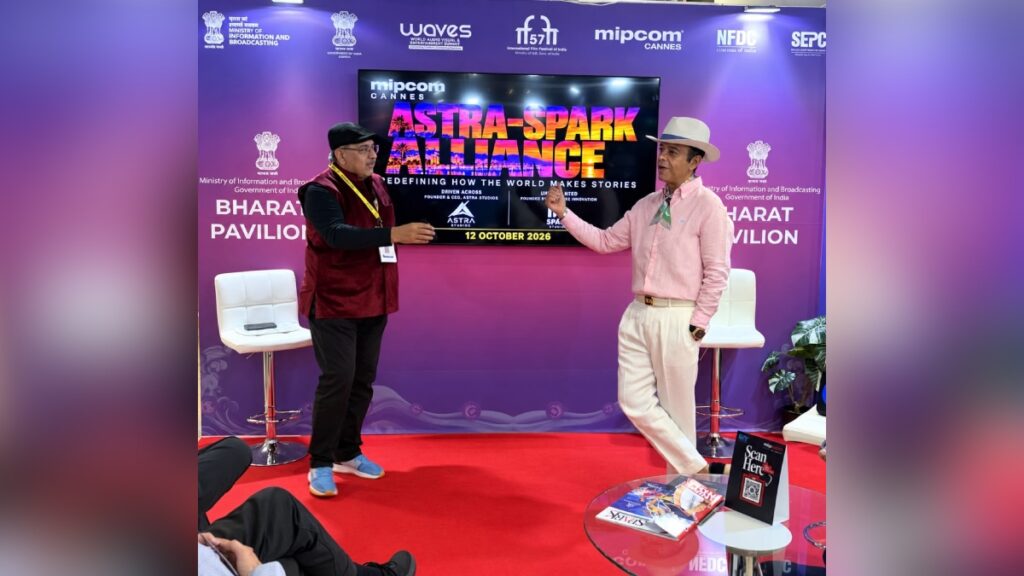
The importance of continuity in professional storytelling
Bedi said audiences needed to recognise the same characters and worlds across different angles and sequences. SparkStation’s continuity engine focuses on five elements: face, expression, wardrobe, location and props.
Ghose added that continuity went beyond visual consistency. Artists also had to ensure that performance, mood and dramatic intent worked within a sequence.
“Our contribution is to bring that wider cinematic understanding into how the tools are used and the work is reviewed,” he said.
The impact on artists and production teams
Ghose said the aim was to give artists more room to explore creative possibilities while maintaining clear briefs, accountable reviews and dependable delivery. Technology would support the process, rather than replace creative judgement.
Bedi said SparkStation connects production from the first idea to the final cut and supports exports to Premiere, Final Cut and DaVinci Resolve, allowing generated material to move into familiar finishing workflows.
Demonstrating quality and economic benefits
Ghose said Astra’s original slate and commissioned projects would help test the approach, with success measured through coherent storytelling, convincing performances and delivery against a brief.
Bedi said the goal was to shorten production cycles and reduce costs, while acknowledging that gains would vary according to each project’s format, complexity and finishing requirements.
Industry opportunities at Mipcom
Bedi outlined three opportunities for partners: co-producing original IP, commissioning films, series, animation, VFX or branded projects, and licensing SparkStation through Astra-Spark for their own productions.
“We want conversations that lead to concrete partnerships,” he said.
Ghose invited producers to bring stories and production challenges that existing economics had held back, with the alliance exploring practical ways to bring them to life.
Bedi mentioned, “Every storytelling revolution expands what creators can imagine. Together with Astra, we are bringing creative craft and AI into one production engine, so stories are no longer limited by budgets, geographies or languages. At Cannes, we are not unveiling a vision of tomorrow. We are signing the deals that make it real today.”
Ghose added, “The next aesthetic age will unite imagination and intelligence. Astra-Spark puts cinematic craft inside the architecture of AI production. We are inviting producers, broadcasters and brands to build their next stories with us.”
The partnership’s real test will be whether it can turn AI-generated material into finished, commercially viable productions. Astra-Spark wants AI to do more than generate a shot; it wants to help deliver the whole story.
