
AI can speed up a production, help artists explore new ideas and bring digital worlds to life. But can it create the next big Indian animation franchise? That still depends on the people behind the screen.
As artificial intelligence reshapes animation, visual effects (VFX), gaming and filmmaking, India’s creative industries face a bigger challenge than simply adopting new technology. They must develop skilled professionals who can use these tools effectively, tell compelling stories and build intellectual property (IP) that travels beyond Indian shores.
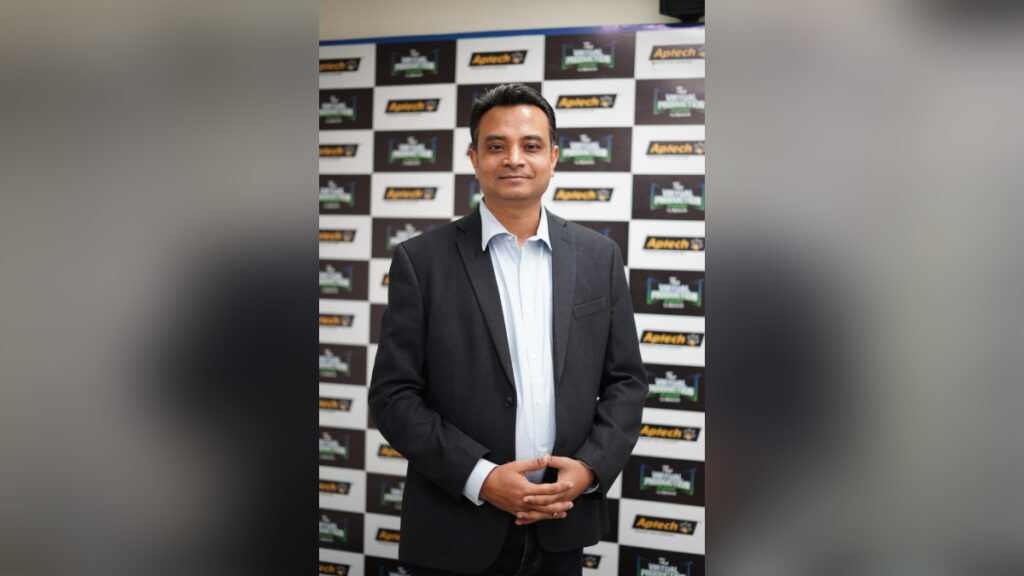
For Abir Aich, executive vice president for technical M&E at Aptech, the focus must remain on the craft, even as the tools change. From industry-ready training to virtual production and original Indian stories, he believes the country’s next phase of growth will depend on how well it combines technology with creative judgement.
AI is changing the creative process
India’s media and entertainment industry reached Rs 2.78 lakh crore in 2025, growing 9 per cent year on year, according to the Ficci-ey report. Digital advertising climbed to Rs 94,700 crore, while animation and VFX recorded more modest growth. The figures point to a growing market, but also to the need for sustainable production models and original IP.
AI changing both the pace of creative work and the way ideas are explored. Teams can test more visual directions, get through repetitive tasks faster and move from an early idea to a workable version sooner. In gaming, for instance, it can help creators experiment with characters, environments and interactions. But producing something faster is only part of the story. The real question is whether it works, whether it serves the brief and connects with the audience. That still depends on creative judgement and a sound understanding of the craft.
“The opportunity is large, though growth is not the same across every part of the sector. Ficci-ey estimates India’s media and entertainment industry at Rs 2.78 lakh crore in 2025, with digital advertising at nearly Rs 94,700 crore. Animation and VFX, meanwhile, saw more modest growth. To me, that points to both the scale of the opportunity and the need to build value through efficient production and original intellectual property. India has built strong production capabilities. The next step is to create more of our own stories, characters and IP, and take them to audiences around the world,” Aich shared.
Beyond software skills
For aspiring professionals, learning the latest software is only the beginning. Employers also need people who understand the discipline they work in, can solve problems and know how to turn an idea into a finished product.
“Knowing the software is a starting point. What matters is what you can do with it. An animator needs to understand movement and how to tell a story through images. A game designer needs to think about how a player experiences a world. Across creative roles, people need to understand the brief, make choices and solve problems.”
AI adds another layer. Professionals will need to guide these tools, assess what they produce and know when something needs to be corrected or reworked. They should also understand where the tools can help and where they fall short.
“A portfolio can show all of this much better than a list of software skills. It gives employers a sense of how someone thinks, handles a challenge and takes an idea through to completion. That combination of creative understanding, technical ability and adaptability will matter,” Aich commented.
Bringing the classroom closer to production
The gap between education and industry remains an important concern for creative-tech employers. A student may know the software, but working in a production environment also means meeting deadlines, responding to feedback and delivering work to a professional standard.
“Students need more opportunities to work on projects that feel close to the realities of a workplace. They should have to understand a brief, plan their time, take feedback and deliver work to a standard, not just mere completing an exercise/assignment. That means going beyond software training. Students need to understand how a production comes together, why certain creative decisions work and how new tools, including AI, fit into the process. They also need to learn how to review an output and improve it. There must be regular conversation between institutions and industry.” he shared.
He further added, “Live briefs, mentoring and portfolio reviews can all help, as can keeping faculty connected with changing workflows. In the end, a graduate is ready when they can contribute to the work and respond to the demands of a production environment.”
Aptech is working to bring these changing workflows into its training programmes, including through its Maac and Arena Animation brands. The aim is to introduce emerging technology without losing sight of the fundamentals that underpin creative work.
At Aptech, we look at emerging technology in the context of how creative workflow is changing. Learning a tool matters, but learners also need the fundamentals to make good decisions about the work they create.
Aich replied, “Across Maac and Arena Animation, we are working to keep programmes connected to evolving industry workflows while retaining a strong grounding in each discipline. In our AI filmmaking programme, for example, learners work through the complete creative process. From developing an idea and shaping a story to creating visuals and bringing them together into a finished film. The skills involved are useful beyond filmmaking. Storytelling and visual communication now have a place in digital content, brand communication and many other areas. We want learners to be able to use new tools with purpose and adapt as those tools change.”
Virtual production opens new doors
Virtual production is changing how filmmakers work with digital environments. LED walls, camera tracking and real-time rendering allow teams to see elements of a virtual world on set and adjust them while filming. The process also brings creative and technical teams closer together.
“Virtual production brings digital environments and real-time rendering into the filmmaking process. With LED walls and camera tracking, for example, teams can see and adjust parts of a digital world while filming. That can bring creative and technical decisions closer together. It also means people need to understand how the different parts of a production connect. A real-time artist may work with digital environments, but also needs to understand lighting, cameras and the director’s intent. There are opportunities in virtual environment design, real-time 3D art, lighting, camera tracking and technical operation,” Aich added.
These roles need more than familiarity with a particular software. They need people who understand how their work fits into a production. Through initiatives such as The Virtual Production Academy by Aptech, we are working at that intersection of creative practice and technology.
Taking Indian stories to the world
India has built a strong base in animation and production services. The next step is to create characters and stories that can grow into franchises across films, series, games, merchandise and other formats.
Aich points to Desi Oon, which won the Jury Award for a commissioned film at the Annecy International Animation Film Festival in 2025, as an example of Indian creative work gaining international recognition. He also cites Chhota Bheem as an example of an Indian character expanding beyond its original format.
India has talent and production experience. The opportunity now is to build more original work and retain a greater share of the value it creates. That calls for closer links between education and industry, access to relevant technology and support for creators who want to develop their ideas over time. It also means understanding what it takes to protect, distribute and extend an IP which is very different from just producing a piece of content.
Aich mentioned, “We have seen promising examples. Desi Oon won a Jury Award at the Annecy International Animation Film Festival in 2025. Chhota Bheem shows how an Indian character can grow beyond a series into other formats and business areas. Both remind us that distinctive ideas, backed by strong execution, can travel. AI can make it easier to explore ideas and produce work. But the ideas themselves, and the judgement needed to bring them to life, still matter. India’s opportunity is to create for the world while building more value around the IP we originate.”
Keeping creativity and ethics in the frame
As AI becomes more common in production, questions around ownership, permissions and the use of creative work to train AI systems will become increasingly important. For Aich, the industry must make room for innovation without overlooking the people whose work gives it value.
“AI can help people explore ideas, work through parts of a production and take on repetitive tasks. But it cannot decide what a story should say or whether the finished work feels right. Those decisions still need human judgement. As the technology becomes more widely used, we also need to be clear about how creative work is used to train AI systems, who owns generated material and what permissions are needed. These are practical questions for artists, studios and clients.”
Students should learn to use AI thoughtfully from the beginning. They need to review what a tool produces, understand its limitations and make informed choices about where it belongs in their work.
The aim should be to make room for innovation while respecting the people and creative work behind the industry.
Preparing the next generation will require work from students, educators and policymakers alike. Students must build strong portfolios, educators must keep their courses relevant, and policymakers must help expand access to creative technology training.
“Students should build a strong foundation in their chosen discipline and learn how relevant technologies fit into the work. A portfolio that shows how they think and what they can complete will be increasingly important. Educators need to keep learning connected to what is happening in studios and production environments. That means practical projects, regular curriculum updates, faculty development and more opportunities for students to get feedback from practitioners.”
He further added, “Policymakers can help widen access to creative technology education through initiatives such as AVGC content creator labs. But the equipment is only one part of it. Students also need trained educators, meaningful projects and clearer pathways into further learning and work. We should measure progress by whether learners can turn their skills into good work and real opportunities,” Aich explained.
Building for the next phase
For Aptech, keeping pace with the industry means developing training in AI and real-time production while ensuring students understand the fundamentals of their chosen disciplines.
“At Aptech, we must keep our programmes relevant to the way creative industries are changing. In the near term, that means building capability in areas such as AI and real-time production, while keeping learners grounded in the creative and technical fundamentals of their chosen discipline. We will continue to work with industry partners and practitioners to understand where new opportunities are emerging and shape learning around them. The aim is to help learners use new technologies with purpose and prepare for a wider range of roles across the creative economy,” Aich stated.
India’s creative-tech ambitions will not be measured by how quickly its artists adopt new tools. The real test will be what they make with them. Faster workflows can help bring ideas to the screen, but original stories, skilled creators and characters that audiences remember are what can turn production strength into lasting global value.
