
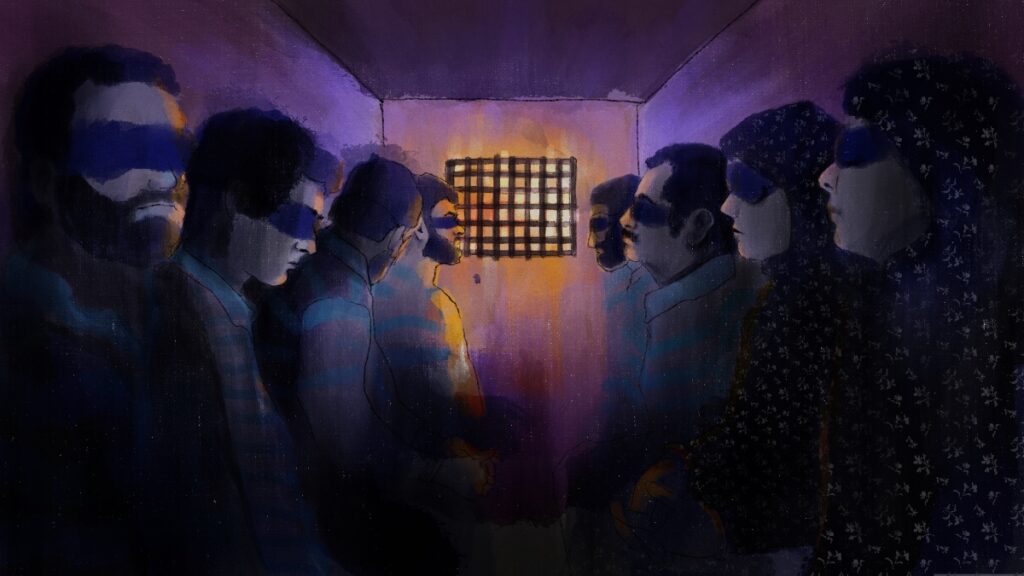
Some stories arrived with sirens. Others arrived in a letter, smuggled out between the lines of small talk, and took years to become a film. That Night belonged firmly to the second category, and by the time it reached the screen, it carried the weight of a fire that Iran’s own prison system could not be bothered to put out in time.
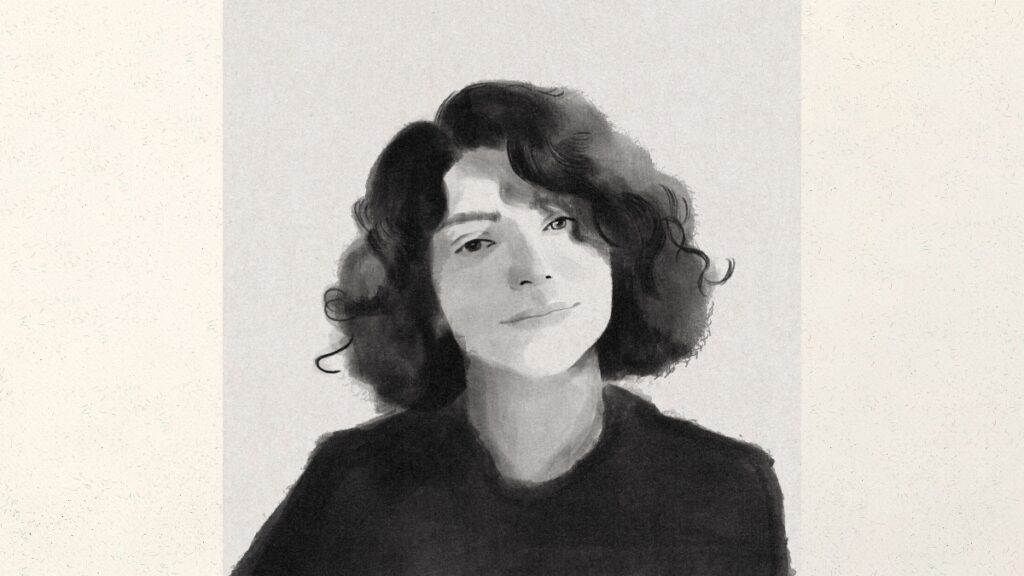
The animated documentary, directed by Hoda Sobhani, was built around the testimony of activist Neda Naji, who survived the 2022 blaze at Tehran’s Evin prison. It arrived at the Annecy International Animation Film Festival as part of a broader reckoning: the woman, life, freedom movement that pulled Iran’s treatment of women into the world’s newsfeed, whether the regime liked it or not.
Sobhani’s own route to the project was suitably circuitous. A theatre degree in Tehran, a cinema masters at Sooreh University, several short films about women’s everyday lives, then a move to America in 2019 for a documentary course at the University of California, Santa Cruz. That Night was her first post-graduation film and her second made on American soil, a fact that said something about how far from home this story had to travel before it could be told properly.
Its origins lay in an earlier short, built from letters exchanged between Sobhani and Naji after Naji’s first stint in prison in 2020. When Naji was released a second time, mid-movement, she had a new story to tell, a far darker one. An interview was arranged within days. What Sobhani heard convinced her this could not simply be filed away. A prison fire that the authorities left unattended for hours, she said, revealed a contempt for human life on an entirely new level.
That conviction came at a cost. Working from abroad, scrolling through protest footage while editing testimony of fire and fear, Sobhani admitted the process repeatedly became too much to bear though staying close to the material, she said, also kept her tethered to home.
Wisely, the film did not attempt to be an encyclopaedia of the Evin fire. It stayed inside one woman’s account of it, with names and identifying details altered to protect the people involved, a sensible precaution when your subject matter is a regime not famous for its sense of humour about dissent.
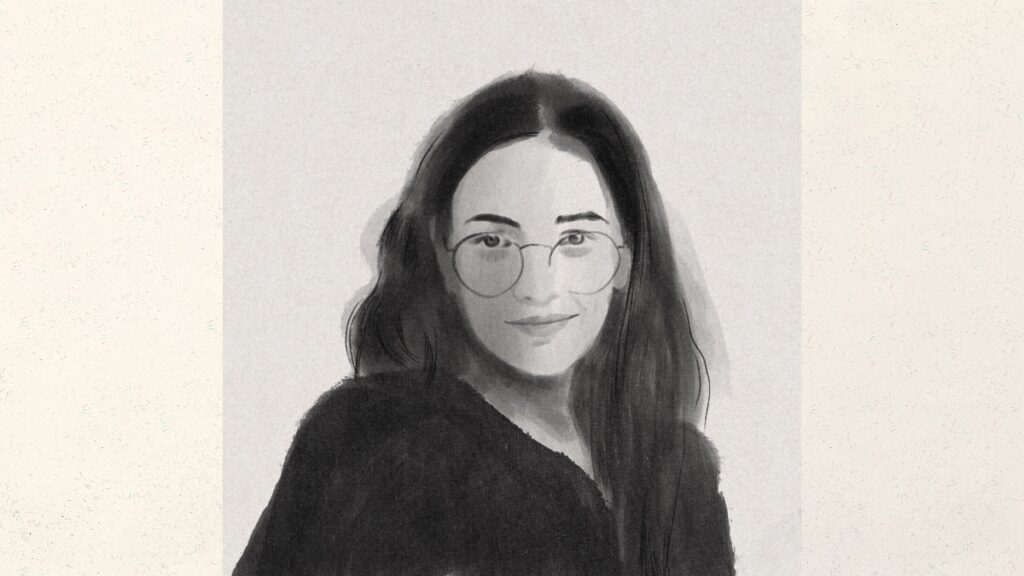
The animation itself was where the real ingenuity lay. Portuguese animator Beatriz Felix had to find a visual language for things no camera could ever have captured: memory, dread, the particular blankness of being interrogated while blindfolded. Her solution was elegant Naji was rendered in solid, painted form, while her interrogator existed only as loose, unfinished linework, a man who was never quite allowed to become a person. Colour did its own quiet work too: pinks and reds around Naji, blues around the guards, slowly bleeding into purple as the story’s power dynamics shifted and blurred.
One sequence stood out. As prisoners were beaten and described as falling “like leaves,” Felix turned the image literal, a fallen body dissolved into a scattering of leaves that multiplied across the screen, conveying scale without ever showing a body count. It was the kind of image live-action simply could not do tastefully, and animation did almost too well.
Felix called the responsibility of animating someone else’s trauma the project’s hardest test; every creative flourish had to serve the testimony, not decorate it. To keep things honest, the team relied on rotoscoping, with Sobhani, friends and even Naji herself acting out scenes for reference, including the film’s gut-punch opener, a child dragged by her hair for not wearing a headscarf.
Underpinning all of it was trust: Naji’s trust in Sobhani to tell her story straight, and the trust between director and animator to find images equal to the words. Without it, Sobhani said simply, the film would have been impossible.
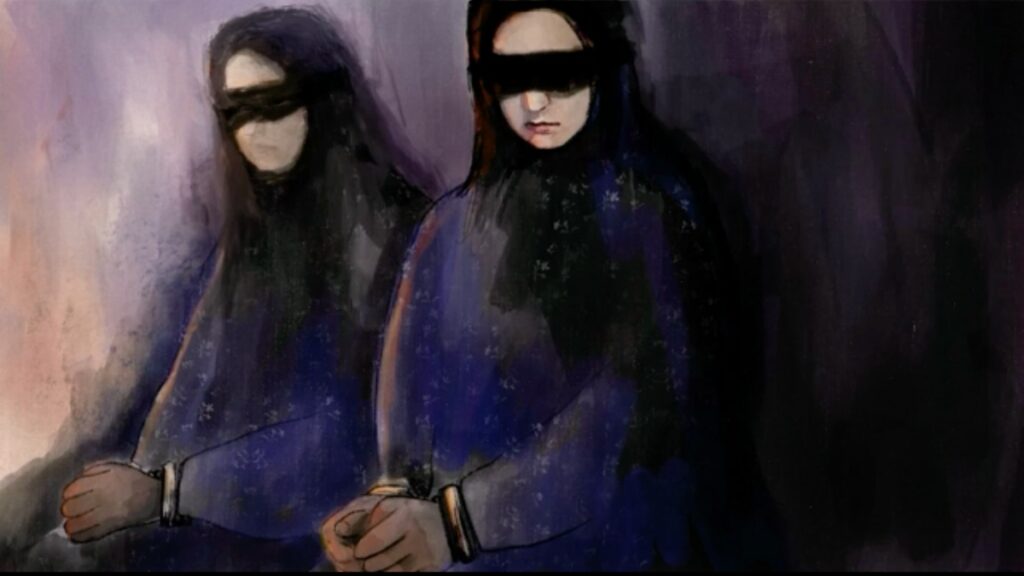
Annecy gave That Night its European premiere, and with it, a global audience, many of whom were hearing about the Evin fire for the first time, and some of whom recognised rather more than they expected to. Sobhani hoped the film would do two things: open eyes to what was happening inside Iran, and prompt a wider rethink of what prisons did to the people locked inside them. Modest aims, perhaps, for 80-odd minutes of hand-drawn grief and defiance, but then again, so was lighting a match in a cell block, and look where that ended up.
