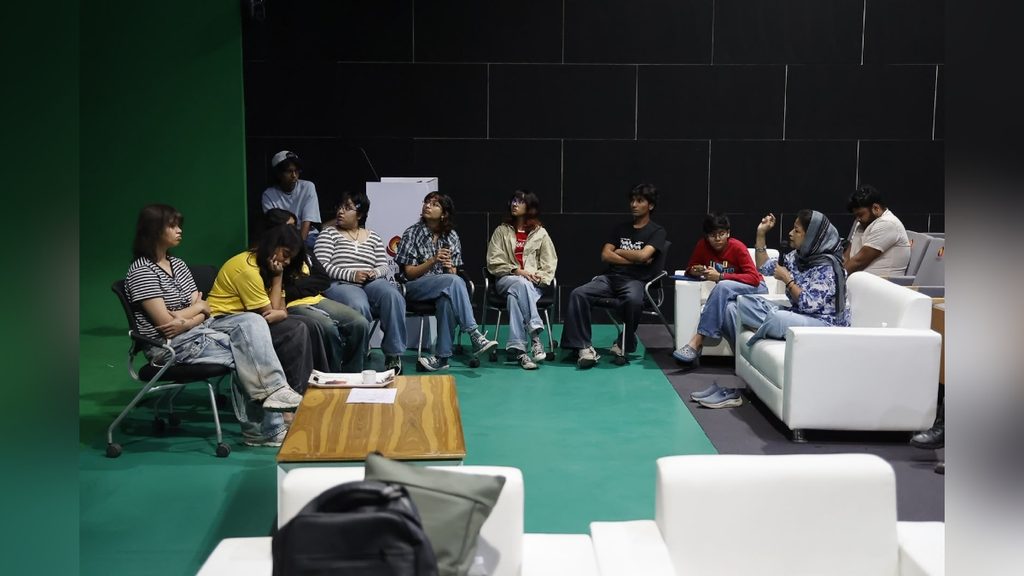
What happens when the studio moves into the classroom? Unitedworld Institute of Design (UID), Karnavati University, and Zebu Animation Studios, an Indian animation studio working across animation production, original intellectual property and technology-led storytelling, are putting that idea into practice with a 120-hour industry-led animation programme for 85 animation and film design students.
Running from August to October 2026, the programme is built around a simple premise: Bringing the Studio into the Classroom. The initiative aims to narrow the industry-academia gap by giving students a closer look at how animation moves from an idea to the screen.
Students will work through the animation filmmaking pipeline, covering story and concept development, screenplay, visual development, storyboarding and animatics, animation, production, compositing and post-production. Zebu artists and mentors will join the classroom through creative mentorship, industry masterclasses, milestone reviews and feedback sessions.
The focus, however, goes beyond mastering software. Storytelling, creative judgement, collaboration, iteration and production discipline are all part of the curriculum, the bits that can make or break a project once the pixels start moving.
Datsi School for Storytellers filmmaker and director Michael Manuel Joseph shared, “Animation education cannot only be about learning software or technique. The real learning begins when a student starts asking why a creative decision works, what the character is trying to communicate and whether the choices being made are serving the story. Through this programme, we want students to experience that process of making, reviewing, questioning and making again.”
He added, “The idea isn’t to recreate a studio inside a university. It is to bring some of the thinking, conversations and creative discipline of a working studio into the classroom. If students begin asking why? before how?, we are moving in the right direction.”
The programme draws on Datsi School for Storytellers, Zebu’s learning initiative focused on practitioner-led creative education, storytelling, mentorship, creative judgement and contemporary industry workflows.
Zebu Animation Studios founder and creative director Veerendra Patil mentioned, “The conversation around the industry-academia gap has been happening for a long time. We believe the industry has a responsibility in closing it. Working artists and studios can contribute not just by teaching tools, but by sharing how we think, review work, solve creative problems and collaborate. This programme is an opportunity for our artists to participate meaningfully in developing the next generation of storytellers.”
For (UID), which offers design education across creative disciplines including animation and film design, the collaboration brings working practitioners directly into students’ creative development.
UID director Col. Surojit Bose expressed, “This collaboration enables our students to engage with professional practitioners and understand how creative ideas move through real production environments. Such exposure complements academic learning by giving students opportunities to test their thinking, receive industry feedback and strengthen their work through an iterative process.”
Across the 120 hours, students will move through different stages of animation filmmaking while taking part in reviews and interactions with industry professionals. The programme is designed to sharpen creative judgement, storytelling and production understanding, while feeding directly into their projects and portfolios.
The collaboration also points to a wider shift in India’s animation ecosystem, where studios and educational institutions are increasingly looking beyond classroom theory to build industry-ready creative talent.
The programme wraps in October with final reviews and student outcomes. For the 85 students taking part, the classroom is about to get a little more like a studio and a lot more hands-on.
